


Video content dominates modern advertising. Consumers scroll past static images but stop for compelling video. Yet for years, creating professional video advertisements remained out of reach for most businesses. The equipment costs, production expertise, and time investment created barriers that only well-funded marketing departments could overcome.
That barrier no longer exists. AI video generation has fundamentally changed how businesses approach advertising content creation, making professional-quality video accessible to everyone from solo entrepreneurs to enterprise marketing teams.
Understanding AI Video Generation in Modern Advertising
AI video generation represents a convergence of multiple artificial intelligence technologies working together. Machine learning models analyze thousands of existing videos to understand composition, pacing, transitions, and visual storytelling. Natural language processing interprets your creative direction. Generative AI then produces original video content based on these inputs.
The practical result is remarkable: you describe what you want, provide some basic assets like product images or brand guidelines, and receive polished video content suitable for advertising campaigns.
This isn't about replacing human creativity – it's about amplifying it. The AI handles technical execution while you focus on strategy, messaging, and understanding your audience. For a deeper exploration of how AI is revolutionizing marketing content creation, check out our guide on AI video generation for stunning marketing content.
The Business Case for AI-Generated Video Ads
Unprecedented Speed to Market
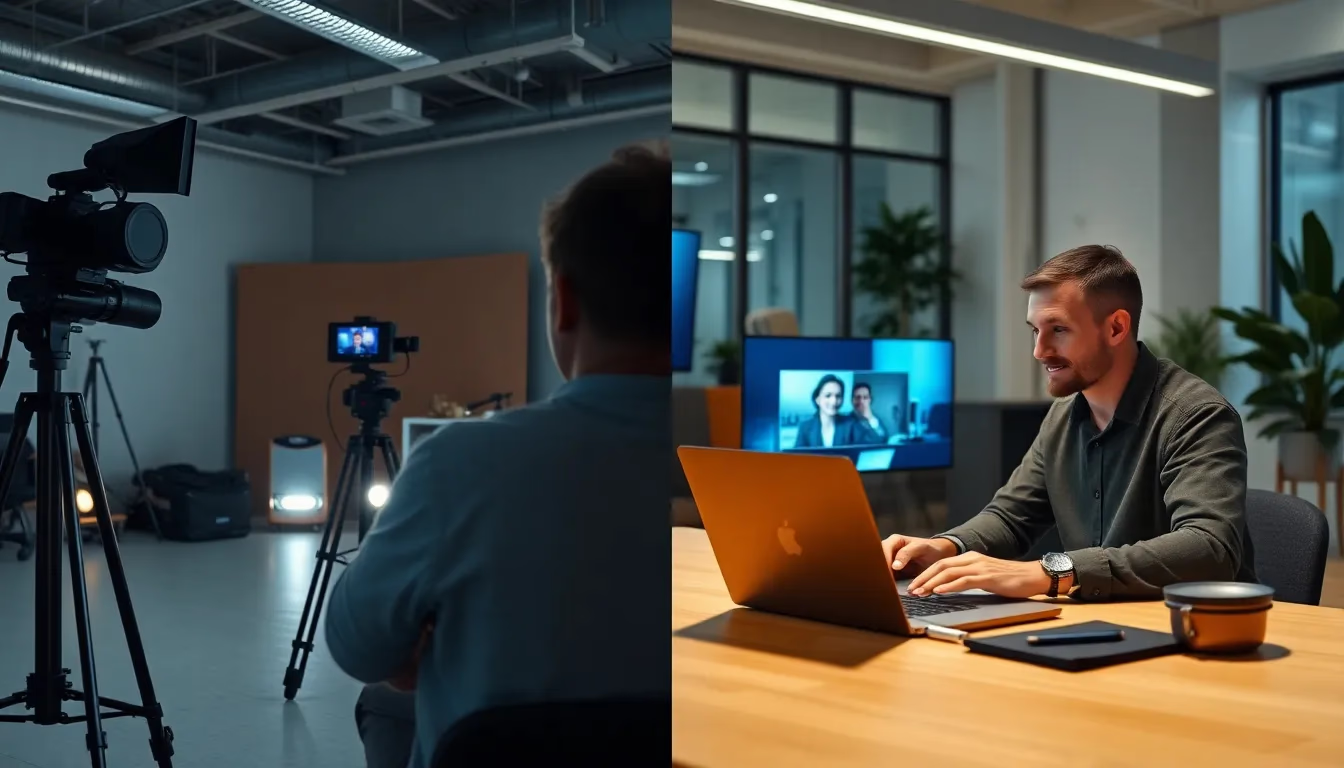
Traditional video production operates on timelines measured in weeks or months. Concept development, scriptwriting, storyboarding, filming, editing, and revisions create lengthy production cycles. By the time your ad launches, market conditions may have shifted.
AI video generation compresses this timeline dramatically. What previously required weeks can now happen in hours. You can respond to trending topics, competitor moves, or sudden market opportunities with relevant video content while the moment still matters.
This speed advantage compounds over time. While competitors struggle through traditional production pipelines, you're already testing, learning, and optimizing your next campaign.
Scalable Content Production
Modern advertising demands volume. Different platforms require different formats. Various audience segments respond to different messaging. Seasonal promotions, product launches, and ongoing brand awareness all need fresh content.
AI makes this scale achievable. Generate variations for Instagram Stories, YouTube pre-roll, TikTok feeds, and LinkedIn simultaneously. Create localized versions for different markets. Produce seasonal updates without starting from scratch each time.
The economics shift fundamentally. Instead of choosing which campaigns deserve video content, you can give every campaign the video assets it needs.
Testing and Optimization at Scale
Effective advertising requires continuous testing. Which headline resonates? Does the product shot or lifestyle shot perform better? Should the call-to-action appear early or late?
Traditional production makes comprehensive testing prohibitively expensive. Creating ten variations of an ad means ten times the production cost. Most businesses settle for testing two or three versions at most.
AI removes this constraint. Generate fifty variations and let performance data guide your decisions. Test different visual styles, pacing, color schemes, and messaging approaches. The AI handles production; you handle strategy.

Creating Effective AI Video Ads: Practical Strategies
Start with Strong Visual Assets
AI video generation performs best when you provide quality inputs. High-resolution product photos, brand imagery, and visual assets give the AI better material to work with.
This is where platforms like Photomize AI become valuable. Before generating video content, ensure your source images meet professional standards. AI-enhanced product photos create better video frames. Improved image quality translates directly into better video output. Learn more about how AI image quality enhancement works to maximize your results.
Write Clear, Specific Prompts
The quality of your AI-generated video depends heavily on how well you communicate your vision. Vague instructions produce generic results. Specific, detailed prompts yield content that matches your brand and objectives.
Include information about:
- Your target audience and what motivates them
- The specific action you want viewers to take
- Brand guidelines including colors, tone, and style preferences
- Platform requirements and format specifications
- Key messages that must appear
Think of prompting as creative direction. The clearer your direction, the better the AI can execute your vision.
Maintain Brand Consistency
AI-generated content should feel like a natural extension of your existing brand presence. This requires establishing clear parameters around visual style, messaging tone, and brand elements.
Create a prompt library documenting successful approaches. Note which descriptions produce results aligned with your brand. Build templates for different campaign types. This systematic approach ensures consistency across campaigns while still allowing creative variation.
Platform-Specific Optimization
Social Media Advertising
Each social platform has unique characteristics that affect video ad performance. Instagram favors visually striking content with quick hooks. TikTok rewards authenticity and trend awareness. LinkedIn audiences expect professional polish and substantive content.
AI video generation allows you to create platform-native content efficiently. Generate a core concept, then produce variations optimized for each platform's specifications and audience expectations.
Vertical video for Stories and Reels. Square formats for feed posts. Longer formats for YouTube. Each version maintains your core message while respecting platform conventions.
E-commerce Product Videos
Product videos drive conversions. Seeing products in context, understanding scale and features, and visualizing ownership all reduce purchase hesitation.
AI excels at transforming static product images into dynamic video content. Product rotations, feature highlights, lifestyle contexts, and comparison views can all be generated from quality source photographs. If you're wondering about the realism achievable with AI-generated visuals, our analysis of whether you can distinguish AI photos from reality offers fascinating insights.
Retargeting Campaigns
Retargeting audiences already know your brand. They've visited your site, viewed products, or engaged with previous content. Video ads for these audiences can be more specific and action-oriented.
AI enables personalized video approaches at scale. Create variations featuring different product categories based on browsing behavior. Adjust messaging for cart abandoners versus casual browsers. The ability to produce numerous variations makes sophisticated retargeting strategies practical.

Measuring Success and Iterating
Key Metrics for AI Video Ads
Track performance data systematically. View rates indicate initial hook effectiveness. Watch time reveals whether content maintains interest. Click-through rates measure action motivation. Conversion rates determine actual business impact.
Compare AI-generated content against traditional production. In many cases, AI content performs comparably or better, particularly when rapid iteration allows for optimization that traditional production timelines prevent.
Continuous Improvement Cycles
The real advantage of AI video generation emerges through iteration. Launch, measure, learn, improve, repeat. Each cycle refines your understanding of what works for your specific audience and objectives.
Document learnings. Which visual styles drive engagement? What messaging approaches convert? How do different platforms respond to various content types? Build this knowledge systematically, and your AI-generated content improves continuously.
Common Challenges and Solutions
Maintaining Authenticity
Audiences increasingly recognize AI-generated content. While technical quality continues improving, authenticity remains essential. Balance AI efficiency with genuine brand voice and values.
Use AI for production efficiency while keeping strategic and creative direction human-led. The technology executes; you guide.
Quality Control Processes
AI occasionally produces unexpected results. Establish review processes before content goes live. Check for brand alignment, message accuracy, and technical quality. Build feedback loops that improve prompt templates over time.
Integration with Existing Workflows
AI video generation works best as part of broader marketing operations. Connect it with your planning processes, approval workflows, and performance tracking systems. The goal is seamless integration, not separate silos.
The Future of AI in Advertising
AI video generation capabilities continue advancing rapidly. Real-time personalization, interactive elements, and increasingly sophisticated visual generation are emerging. Businesses establishing AI workflows now build competitive advantages that compound over time.
The question isn't whether to adopt AI video generation – it's how quickly you can integrate it effectively into your marketing strategy. Start experimenting today with platforms like Photomize AI for your visual content needs, and begin building the capabilities that will define successful advertising in the years ahead.
The advertising landscape rewards those who adapt quickly. AI video generation represents one of the most significant shifts in content production capability in decades. The tools are available, the learning curve is manageable, and the competitive advantages are substantial. Your next campaign could be your most efficient – and effective – yet.


![AI Photos – Can You Still Distinguish Fiction from Reality? [Test/Analysis]](/images/pages/blog/7/cover.avif)