
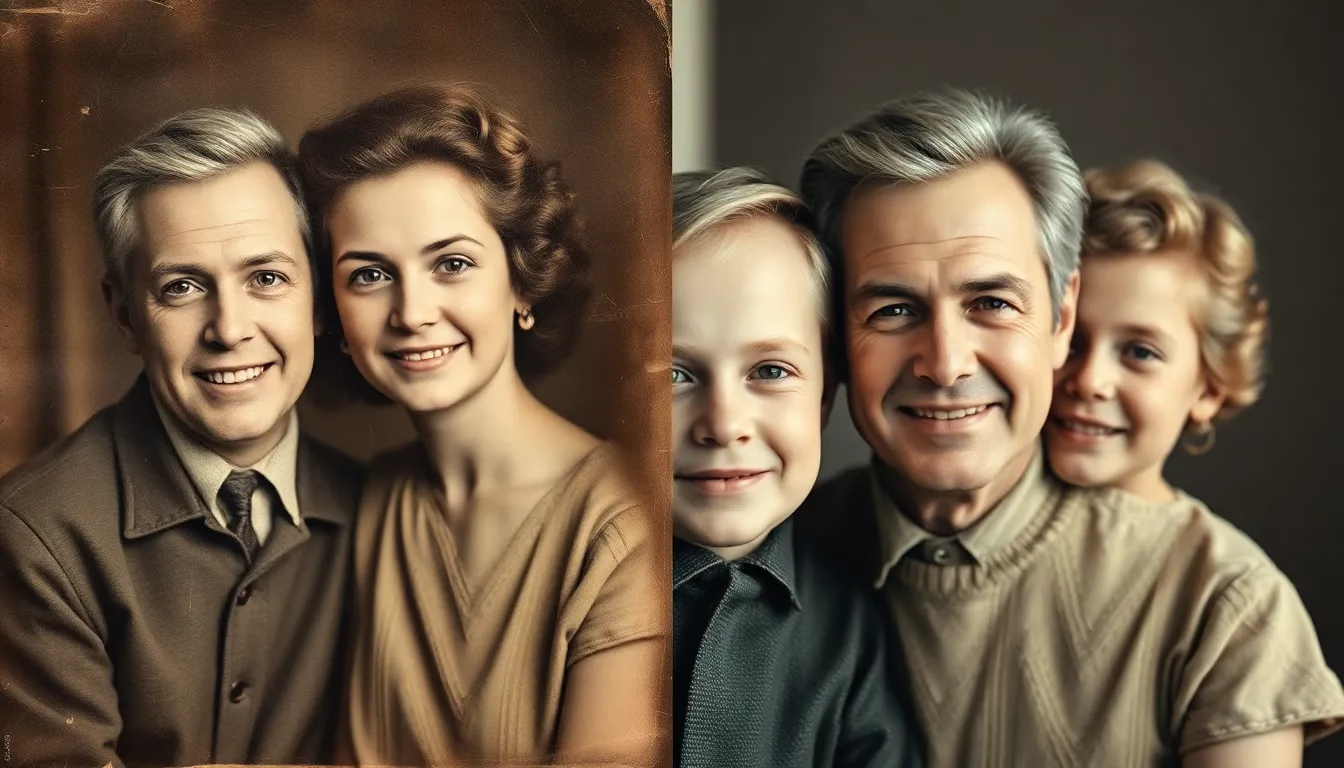

Every family possesses a collection of irreplaceable photographs – images capturing moments that can never be recreated. Grandparents on their wedding day, children taking first steps, gatherings of relatives long since passed. Yet time treats photographs harshly. Fading, water damage, scratches, and deterioration gradually erase these precious visual connections to our histories.
Traditional photo restoration required skilled technicians working painstakingly with editing software, often charging substantial fees for results that still fell short of the original image quality. Many families resigned themselves to accepting damaged photographs as unavoidable casualties of time, storing fragile originals in boxes rather than displaying them proudly.
AI photo restoration has fundamentally transformed this landscape. Advanced machine learning algorithms now analyse damaged images, intelligently reconstruct missing information, and produce restorations that would have seemed impossible just years ago. What once required expensive professional intervention is now accessible to anyone seeking to preserve family memories.
Understanding Photo Deterioration and Damage Types
Common Causes of Photograph Degradation
Photographs deteriorate through numerous mechanisms, each presenting unique restoration challenges. Chemical degradation affects the photographic emulsion itself, causing colour shifts, fading, and yellowing that progressively obscure original image content. This process accelerates dramatically when photographs are stored in humid environments or exposed to light.
Physical damage encompasses scratches, tears, creases, and surface abrasions that remove portions of the image layer entirely. Unlike fading, which leaves underlying information partially recoverable, physical damage creates gaps where original data no longer exists. Restoration requires intelligent reconstruction rather than simple enhancement.
Water damage produces particularly devastating effects, causing emulsion layers to separate, colours to bleed, and mould growth that consumes image content. Historical photographs stored in basements, attics, or areas prone to flooding frequently suffer extensive water damage that compounds other deterioration.
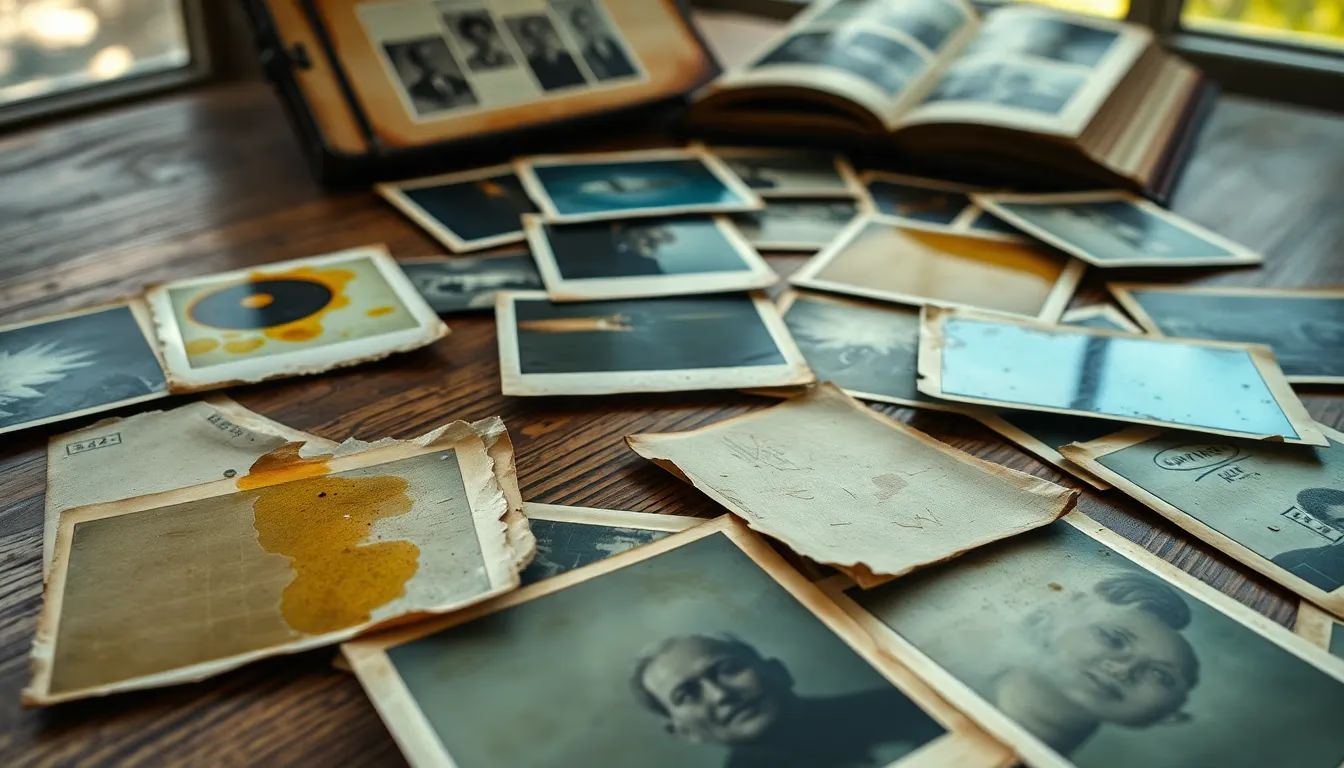
Environmental factors contribute ongoing degradation even to photographs stored carefully. Temperature fluctuations cause expansion and contraction that cracks emulsion surfaces. Atmospheric pollutants interact chemically with photographic materials. Insect activity and biological contamination pose additional threats to vulnerable organic components.
Why Traditional Restoration Proved Challenging
Conventional photo restoration relied heavily on manual editing techniques requiring substantial skill and time investment. Professionals would painstakingly clone areas to cover damage, adjust colour balance through trial and error, and attempt to sharpen degraded details through various filtering approaches.
These methods faced fundamental limitations. When damage removed image content entirely, restorers could only guess at original appearance. Reconstructing a damaged face required artistic interpretation rather than accurate recovery. Colour restoration from severely faded images involved subjective decisions about original tones that might bear little resemblance to reality.
Cost presented another significant barrier. Professional restoration services typically charged hundreds of pounds for single images, placing quality restoration beyond reach for families with extensive collections requiring attention. Many treasured photographs remained unrestored simply because professional services were financially impractical.
How AI Photo Restoration Technology Works
Machine Learning Approaches to Image Recovery
Modern AI restoration systems train on millions of photograph pairs – damaged images alongside their undamaged equivalents. Through this training, algorithms learn patterns connecting various damage types to underlying image content. When presented with new damaged photographs, these systems apply learned patterns to reconstruct probable original appearances.
Neural networks excel particularly at face reconstruction, having trained extensively on human facial structures. When scratches or fading obscure facial features, AI systems draw upon deep understanding of facial anatomy to generate plausible reconstructions. Eyes, noses, and mouths emerge from damage with remarkable accuracy because the underlying patterns are deeply encoded in trained models.
Colour restoration benefits from AI's ability to analyse contextual clues throughout images. Grass should be green, skies blue, and skin tones fall within particular ranges. Even when original colours have faded beyond human recognition, AI systems detect residual colour information and apply intelligent corrections based on scene understanding.
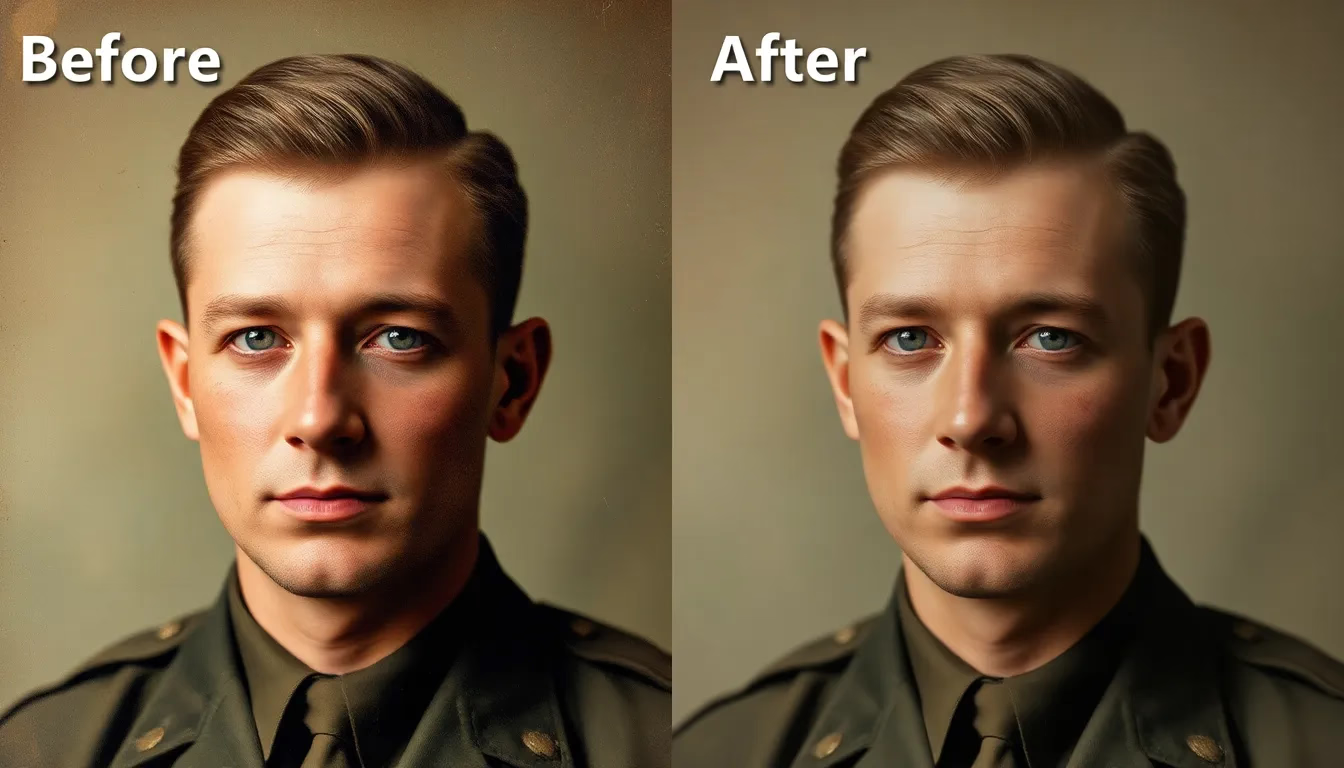
Platforms like Photomize AI leverage these advanced techniques to deliver professional-quality restorations accessible to everyday users. Rather than requiring technical expertise with complex editing software, AI-powered tools handle the sophisticated processing automatically, allowing anyone to restore treasured photographs regardless of technical background.
Capabilities and Realistic Expectations
AI restoration produces genuinely impressive results across most common damage types. Scratches and surface damage disappear seamlessly. Faded images regain vivid contrast and clarity. Yellowed photographs return to neutral tones. Torn sections reconstruct convincingly when surrounding context provides sufficient information.
However, understanding limitations ensures realistic expectations. Heavily damaged areas with minimal surrounding context challenge even advanced AI systems. A photograph where faces are entirely obscured cannot be accurately restored because no information exists to guide reconstruction – AI would generate plausible but potentially inaccurate faces.
Similarly, colour restoration from black and white photographs involves educated guessing rather than true recovery. AI systems colourize based on learned associations, producing aesthetically pleasing results that may not reflect actual original colours. A colourized vintage photograph shows plausible colours, not necessarily accurate ones.
Practical Guide to AI Photo Restoration
Preparing Photographs for Digital Restoration
Successful AI restoration begins with quality digitization. Scanning original photographs at high resolution captures maximum available detail, providing AI systems with more information to work with. Resolution of 600 DPI or higher is recommended for prints, with higher resolutions beneficial for smaller original photographs.
Scanner quality significantly impacts results. Flatbed scanners with good optical resolution produce superior digitizations compared to smartphone photographs of prints. Proper scanner calibration ensures accurate colour capture, giving AI systems reliable starting points for restoration work.
For photographs too fragile to scan directly, careful smartphone photography under even, diffused lighting produces acceptable digitizations. Avoiding harsh shadows, reflections, and perspective distortion maximises usable image quality. Multiple captures allow selecting the best starting point for restoration.
Choosing Restoration Approaches for Different Damage
Different damage types benefit from specific restoration approaches. Light scratches and surface marks respond well to automatic scratch removal tools that detect and fill linear damage patterns. More severe physical damage may require combining automatic restoration with manual guidance to ensure accurate reconstruction.
Fading and colour shift typically restore effectively through automatic colour correction algorithms. AI systems analyse overall colour balance and apply corrections that neutralise unwanted colour casts whilst enhancing contrast and saturation appropriately.
For comprehensive restoration projects involving multiple damage types, staged approaches often produce superior results. Addressing physical damage first, then colour correction, and finally detail enhancement allows each processing stage to work with cleaner source material.
Those interested in creating consistent restored collections might consider training their own AI model to understand specific photographic styles or family resemblances, ensuring restoration results maintain visual coherence across multiple images.

Applications Beyond Family Photographs
Professional and Commercial Restoration
Businesses increasingly recognise AI restoration value for historical archives and legacy imagery. Companies celebrating anniversaries restore founding-era photographs for marketing materials. Real estate firms restore historical property images demonstrating longstanding presence. Professional services maintain visual heritage connecting present operations to distinguished histories.
Museums and archives employ AI restoration to make deteriorating collections accessible without damaging fragile originals. Digital restoration creates shareable versions preserving visual content whilst originals remain safely stored. Educational institutions benefit similarly, restoring historical images for teaching materials and publications.
Similar AI-powered approaches are transforming other visual domains. Just as restoration recovers damaged photographs, AI business team photos create consistent corporate imagery, and AI avatar profile pictures generate professional digital portraits – all leveraging advanced image generation technology for practical applications.
Creative and Artistic Applications
Beyond straightforward restoration, AI tools enable creative reinterpretation of historical imagery. Colourizing black and white photographs brings historical scenes to vivid life. Enhancing resolution reveals details invisible in original prints. Combining restoration with artistic effects creates unique interpretations honouring original images whilst adding contemporary creative elements.
Genealogy enthusiasts particularly embrace these capabilities, assembling family history presentations where restored photographs appear alongside contemporary images. Visual consistency across generations creates powerful narratives connecting past and present family members.
Best Practices for Preservation and Sharing
Maintaining Restored Images
Digital restoration creates new image files requiring proper management for long-term preservation. Saving restored images in lossless formats preserves full quality without compression degradation. TIFF and PNG formats maintain quality through unlimited saves and copies, unlike JPEG which degrades with each save.
Multiple backup copies across different storage media protect against data loss. Cloud storage provides geographic redundancy, whilst local backups on external drives ensure access regardless of internet connectivity. Treating digital restorations with preservation care matching physical original importance ensures these recovered memories survive for future generations.
Sharing and Displaying Restored Photographs
Restored photographs deserve prominent display rather than digital storage obscurity. High-quality prints from restored images often exceed original print quality, benefiting from modern printing technology applied to AI-enhanced digital files. Professional printing services produce archival-quality outputs suitable for framing and display.
Digital sharing through family networks distributes restored images widely. Cloud-based photo albums allow extended family members to access and download restorations. Social media sharing introduces younger generations to family history through imagery previously too degraded for meaningful viewing.
The Future of Memory Preservation
AI photo restoration continues advancing rapidly. Each generation of algorithms produces more accurate reconstructions, handles more severe damage, and requires less manual intervention. Features once requiring professional expertise become automated, accessible to anyone with photographs requiring attention.
This democratisation of restoration technology represents profound change in how societies preserve visual heritage. Photographs that would have been lost to deterioration now survive indefinitely in restored digital forms. Family histories, community records, and cultural documentation gain protection against time's relentless degradation.
For anyone possessing damaged photographs – whether treasured family portraits or historically significant documentation – AI restoration offers unprecedented opportunity to recover and preserve these irreplaceable visual memories. The technology that once seemed futuristic now sits readily accessible, waiting to breathe new life into images that connect us to our pasts and inform our futures.
Begin exploring AI restoration possibilities through Photomize AI, where advanced technology meets intuitive accessibility, transforming how we preserve and celebrate photographic memories across generations.