

Digital photography has democratised image creation, placing powerful cameras in billions of pockets worldwide. Yet capturing photographs represents merely the beginning of the creative journey. The difference between a snapshot and a striking image often lies in thoughtful post-processing – adjustments to exposure, colour, composition, and countless subtle elements that transform raw captures into polished visual stories.
Traditional photo editing demanded substantial investment in both software and skills. Professional applications required expensive subscriptions and steep learning curves spanning months or years. Amateur photographers faced an uncomfortable choice: accept limitations of basic editing tools or commit significant time mastering complex professional software.
AI photo editing online has fundamentally disrupted this paradigm. Intelligent algorithms now analyse images, identify enhancement opportunities, and apply sophisticated adjustments automatically. What once required expert knowledge of curves, layers, and masking techniques is now accessible to anyone with an internet connection and images worth improving.
Understanding AI Photo Editing Technology
How Machine Learning Transforms Image Processing
Artificial intelligence approaches photo editing fundamentally differently from traditional software. Conventional editing tools provide manual controls requiring users to understand technical concepts and make informed decisions about every adjustment. AI systems instead analyse image content, recognise what improvements would benefit the photograph, and apply corrections intelligently.
Machine learning models train on millions of photographs, learning relationships between input images and desired outcomes. These systems develop understanding of proper exposure levels, natural colour balance, appropriate contrast, and countless other parameters that distinguish amateur snapshots from professional imagery. When processing new photographs, AI applies this accumulated knowledge to suggest or implement improvements.
Neural networks powering modern AI editing tools recognise image content contextually. They understand that skin tones require different treatment than foliage, that skies benefit from specific enhancement approaches, and that shadows in portraits demand careful handling to maintain natural appearance. This contextual awareness enables intelligent, content-aware adjustments impossible with traditional global editing approaches.

Key Capabilities of AI Photo Editors
Modern AI editing platforms offer remarkably sophisticated capabilities that continue expanding rapidly. Automatic enhancement analyses photographs holistically, adjusting exposure, contrast, saturation, and sharpness simultaneously to produce optimally balanced results. These one-click improvements often rival adjustments that would require skilled editors substantial time to achieve manually.
Intelligent retouching addresses common portrait concerns automatically. Skin smoothing algorithms reduce blemishes while preserving natural texture, avoiding the artificial plastic appearance that plagued earlier automated tools. Eye enhancement brightens and clarifies without creating unrealistic effects. These capabilities prove particularly valuable for those seeking to create compelling AI dating profile photos that present authentic yet flattering self-representations.
Object removal has become remarkably sophisticated through AI advancement. Unwanted elements – photobombers, distracting signs, unfortunate timing of passing vehicles – disappear seamlessly as algorithms intelligently reconstruct background content. What previously required painstaking manual cloning now happens with simple selection and single clicks.
Background replacement enables creative possibilities previously requiring professional studio setups. AI accurately identifies subject boundaries, separating foreground elements from backgrounds with precision that rivals careful manual masking. Subjects can be placed against new environments, solid colours, or artistic backdrops without visible artifacts revealing the manipulation.
Practical Applications Across Photography Genres
Portrait and People Photography
Portrait photography presents unique editing challenges that AI handles with increasing sophistication. Skin retouching requires delicate balance – removing temporary imperfections while preserving texture and character that make faces recognisably human. Modern AI tools achieve this balance automatically, analysing facial features and applying contextually appropriate enhancements.
Lighting correction in portraits proves particularly valuable. Harsh shadows beneath eyes, unflattering overhead lighting, and uneven illumination across faces all respond well to AI adjustment. Algorithms understand facial geometry and apply corrections that appear natural rather than obviously manipulated.
Group photographs benefit enormously from AI capabilities. Ensuring everyone appears with eyes open, pleasant expressions, and flattering positioning traditionally required either multiple shots or complex compositing. AI tools can now combine elements from multiple captures automatically, selecting optimal appearances for each individual. This proves invaluable for AI business team photos where coordinating large groups presents logistical challenges.

Landscape and Travel Photography
Landscape images often suffer from dynamic range limitations – cameras struggle to capture both bright skies and shadowed foregrounds simultaneously. AI editing excels at recovering highlight and shadow detail, producing balanced exposures that reveal information across the entire tonal range.
Colour enhancement in landscapes benefits from AI understanding of natural environments. Algorithms recognise sky, water, foliage, and earth tones, applying appropriate adjustments to each element independently. Skies become more dramatic without affecting foreground colours. Foliage appears vibrant without unnatural oversaturation.
Haze removal transforms distant vistas obscured by atmospheric interference. AI algorithms analyse image content and intelligently reduce haze effects, revealing detail and colour in distant elements that appeared washed out in original captures. Travel photographs from humid climates or polluted urban environments benefit dramatically from these capabilities.
Product and Commercial Photography
Commercial applications demand consistent, professional results that AI editing delivers reliably. Product photography requires precise colour accuracy, appropriate lighting, and distraction-free presentation. AI tools automate background removal, colour correction, and shadow creation that previously required skilled retouchers.
E-commerce imagery benefits from batch processing capabilities. Hundreds of product photographs can receive consistent treatment automatically, maintaining brand coherence while eliminating tedious repetitive editing. Small businesses without dedicated photography resources can achieve professional-quality product imagery efficiently.
Food photography represents another domain where AI excels. Enhancing appetising qualities of culinary subjects requires understanding of colour psychology, appropriate saturation levels, and lighting that emphasises texture and freshness. Platforms like Photomize AI enable creation of compelling food photography that drives appetite and engagement.
Choosing the Right AI Photo Editing Platform
Essential Features to Evaluate
Selecting appropriate AI editing tools requires understanding your specific needs and evaluating platforms against those requirements. Processing quality varies significantly between services – some deliver genuinely impressive results while others produce obviously artificial output. Testing platforms with your own photographs provides the most reliable assessment of quality.
Speed and efficiency matter considerably for regular editing workflows. Some AI tools process images nearly instantaneously while others require substantial waiting periods. For occasional single-image editing, speed proves less critical than for batch processing hundreds of photographs.
Output options deserve attention. Consider what file formats, resolution options, and quality settings platforms provide. Professional applications may require lossless formats or specific colour profiles that not all services support adequately.
Privacy policies warrant careful review. Photographs often contain sensitive personal content, and understanding how platforms handle, store, and potentially use uploaded images protects your privacy and intellectual property. Reputable services clearly communicate data handling practices and provide appropriate protections.
Browser-Based Versus Downloadable Solutions
Online AI photo editors offer significant convenience advantages. No software installation, automatic updates, and accessibility from any device with internet connectivity simplify workflows considerably. Processing occurs on remote servers, meaning even modest computers can leverage powerful AI capabilities.
Downloadable applications provide advantages in certain scenarios. Offline functionality enables editing without internet connectivity. Local processing may offer speed advantages for large files and ensures photographs never leave your device. Professional workflows sometimes require desktop application integration that browser-based tools cannot provide.
Hybrid approaches increasingly combine benefits of both models. Some platforms offer browser interfaces for casual editing alongside desktop applications for intensive professional work. An AI photo editor that provides flexible access options accommodates diverse workflow requirements effectively.

Maximising Results with AI Photo Editing
Starting with Quality Source Material
While AI capabilities continue expanding impressively, input quality still influences output quality significantly. Photographs captured with attention to basic compositional principles, reasonable exposure, and sharp focus provide better foundations for AI enhancement than carelessly captured snapshots.
Camera settings deserve consideration even when planning AI post-processing. Shooting in RAW format preserves maximum information for editing, though many AI tools work effectively with JPEG files. Adequate exposure in-camera – even if imperfect – provides more recoverable detail than severely under or overexposed captures.
Lighting conditions during capture affect AI editing possibilities. Photographs taken in reasonable lighting conditions enhance more successfully than images captured in extreme darkness or harsh direct sunlight. While AI can improve problematic lighting, starting from better conditions produces superior final results.
Combining AI Tools Strategically
Sophisticated editing workflows often combine multiple AI capabilities strategically. Initial automatic enhancement establishes baseline improvements in exposure and colour. Subsequent targeted adjustments address specific concerns – retouching subjects, enhancing skies, removing distractions. Final passes apply stylistic choices through filters or presets.
Different AI tools excel at different tasks. Some platforms provide superior portrait retouching while others handle landscape enhancement more effectively. Experienced editors sometimes process images through multiple platforms, leveraging specific strengths of each. This approach requires understanding capabilities and limitations of various tools.
For those requiring maximum customisation, training personalised AI models enables editing systems that understand your specific aesthetic preferences and visual style requirements.
Understanding Limitations and Appropriate Expectations
Despite remarkable capabilities, AI photo editing cannot perform miracles. Severely degraded images may lack sufficient information for meaningful enhancement. Extreme motion blur, massive overexposure destroying highlight detail, or catastrophic compression artifacts limit what even sophisticated algorithms can recover.
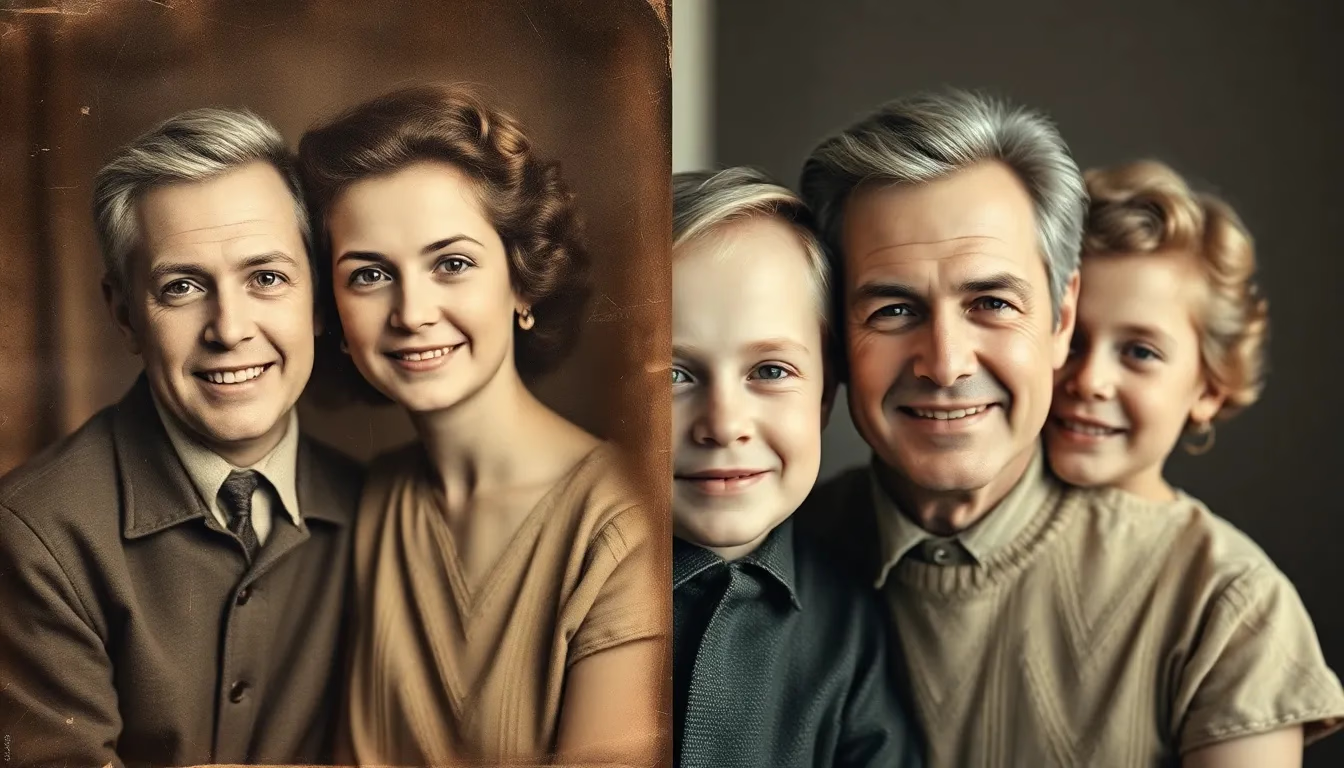
For historical photographs suffering significant deterioration, specialised AI photo restoration tools provide more appropriate solutions than general-purpose editors. These platforms specifically address challenges of damaged, faded, and deteriorating photographs with algorithms trained for restoration tasks.
Authenticity concerns warrant consideration in certain contexts. Professional photojournalism and documentary photography maintain ethical standards regarding manipulation. Understanding where AI enhancement crosses into misrepresentation helps maintain integrity in contexts where truthful representation matters.
The Future of AI Photo Editing
AI photo editing capabilities continue advancing rapidly. Each generation of algorithms delivers improved quality, faster processing, and expanded capabilities. Current trajectory suggests increasingly sophisticated tools becoming available to broader audiences at decreasing costs.
Real-time AI editing during capture represents an emerging frontier. Some smartphone cameras already apply AI enhancement instantaneously as photographs are taken. This integration blurs traditional boundaries between capture and post-processing, potentially eliminating separate editing steps entirely for many use cases.
Personalisation increasingly shapes AI editing development. Rather than applying universal improvements, future tools will learn individual preferences and aesthetic sensibilities, applying customised enhancements aligned with personal visual styles. This evolution promises editing experiences tailored specifically to individual creative visions.
Conclusion
AI photo editing online has democratised professional-quality image enhancement, placing sophisticated capabilities within reach of anyone seeking to improve their photographs. Technology that recently required expensive software, substantial technical knowledge, and considerable time investment now delivers impressive results through intuitive browser-based interfaces.
Whether enhancing portraits for personal use, preparing product imagery for commercial applications, or perfecting travel photographs worth sharing, AI tools provide practical solutions that continue improving. Understanding capabilities, selecting appropriate platforms like Photomize AI, and applying tools strategically enables results that genuinely transform ordinary captures into extraordinary images.
The gap between amateur snapshots and professional imagery narrows continuously as AI capabilities expand. For anyone seeking to elevate their photography without investing years mastering complex software, AI photo editing online represents a genuinely transformative opportunity worth exploring.