
The promise of AI image generation has captivated creators, professionals, and businesses worldwide. Yet generic AI tools, whilst impressive, often fall short when you need imagery that truly represents you, your brand, or your specific creative vision. The solution lies in training your own AI model – a process that transforms general-purpose technology into a personalised creative partner that understands exactly what makes your visual identity unique.
Custom AI model training represents the next frontier in personalised content creation. Rather than relying on generic outputs that approximate your needs, a trained model learns your specific features, aesthetic preferences, or brand characteristics, enabling consistent, authentic imagery generation on demand.
Why Generic AI Falls Short
Standard AI image generators work from vast datasets encompassing millions of images. They understand general concepts brilliantly – they can create stunning landscapes, compelling product shots, and atmospheric scenes. However, ask these systems to generate your face, your specific product line, or imagery matching your established brand aesthetic, and limitations become immediately apparent.
The challenge is consistency and authenticity. Generic models approximate rather than replicate. Request ten images of a "professional businessperson," and you receive ten different individuals. For personal branding, business marketing, or any application requiring visual consistency, this variability undermines effectiveness entirely.
Consider the practical implications. A content creator needs consistent imagery across social platforms, blog posts, and marketing materials. A small business owner requires product photography that maintains brand cohesion. An entrepreneur building a personal brand needs professional portraits for various contexts without scheduling countless photoshoots. Generic AI cannot deliver this consistency because it lacks understanding of your specific visual identity.
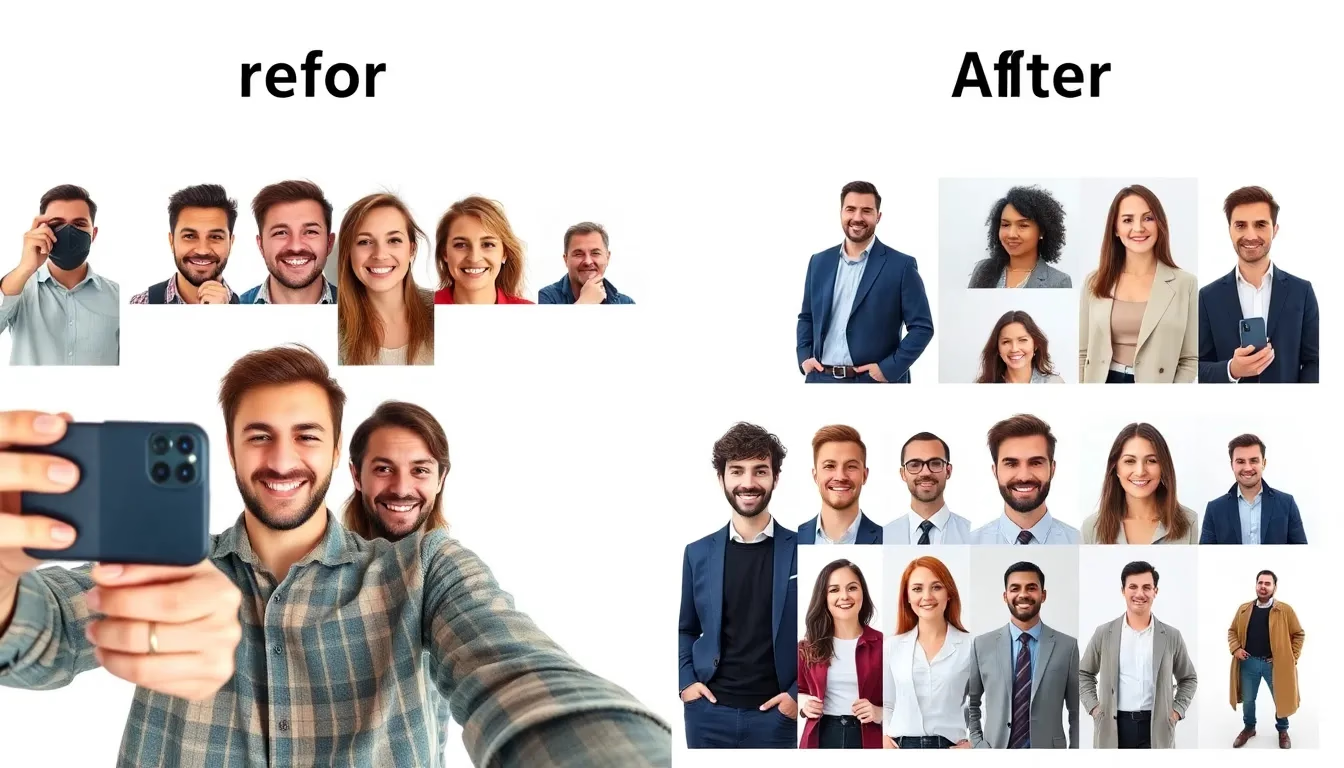
This limitation mirrors challenges across visual industries. Just as AI fashion photography revolutionised how brands create editorial imagery whilst maintaining distinct aesthetic identities, custom model training enables individuals and businesses to achieve similar personalised excellence.
Understanding Custom AI Model Training
The Technical Foundation
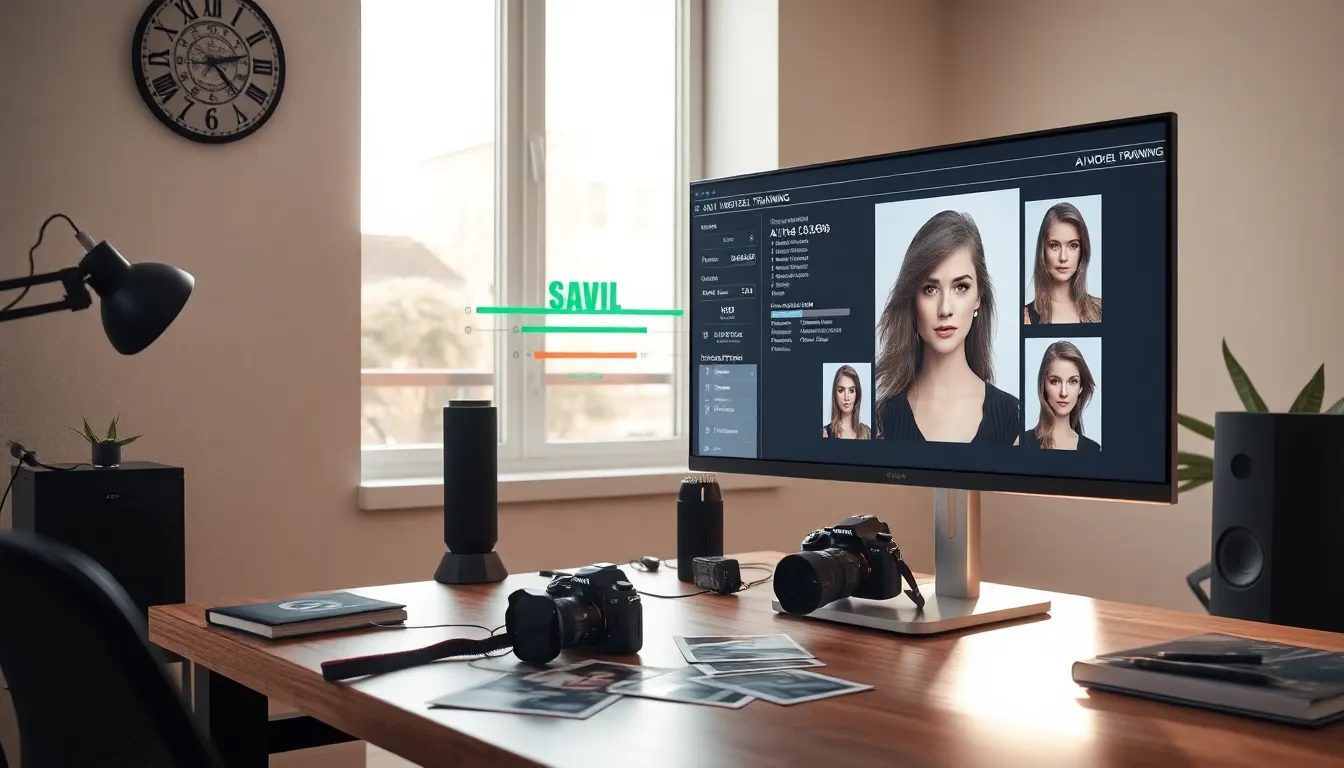
Training your own AI model involves a process called fine-tuning. Rather than building artificial intelligence from scratch – a task requiring massive computational resources and expertise – fine-tuning takes an existing, capable model and teaches it specific new information. Think of it as teaching an already-skilled artist to paint your portrait specifically, rather than training someone to paint from the very beginning.
The model learns from examples you provide. Upload photographs of yourself, your products, or examples embodying your desired aesthetic, and the training process identifies patterns, features, and characteristics that define your visual identity. Once complete, the model can generate new images incorporating these learned elements whilst maintaining the creative capabilities of the underlying system.
This approach democratises what was previously impossible. Creating personalised AI previously required technical expertise, significant computing resources, and considerable time investment. Modern platforms have simplified this dramatically, making custom model training accessible to anyone willing to curate appropriate training images.
What You Can Train
The applications for custom AI models span remarkably diverse use cases. Personal portrait models learn your facial features, enabling generation of professional headshots, creative portraits, and lifestyle imagery featuring you in any context imaginable. Brand aesthetic models capture your visual style – colour palettes, compositional preferences, mood, and atmosphere – enabling consistent content creation aligned with established brand guidelines.
Product-focused models learn specific items, enabling varied product photography without repeated physical photoshoots. This application proves particularly valuable for e-commerce businesses seeking visual variety whilst maintaining product accuracy. The principles align closely with those explored in AI product photography, where consistency and professional quality drive conversion.
Preparing Your Training Data
Quality Over Quantity
Successful model training depends critically on input quality. The principle "garbage in, garbage out" applies with particular force here. Providing poorly lit, inconsistent, or low-quality training images produces a model that generates similarly flawed outputs. Conversely, curating high-quality, varied training data yields remarkably capable results.
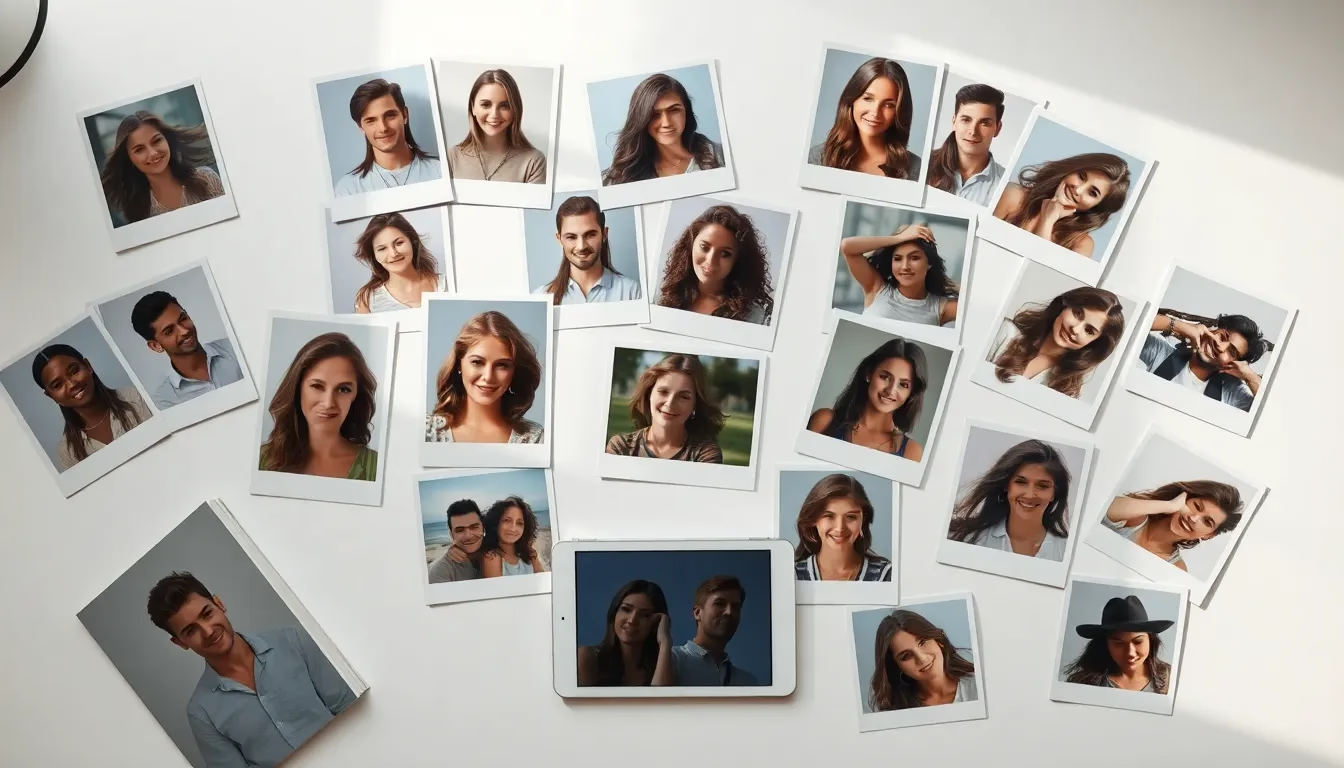
For personal portrait models, aim for 15-30 high-quality images showing your face from various angles, in different lighting conditions, and with varied expressions. Include close-up portraits and wider shots. Ensure images are well-lit with your features clearly visible. Avoid heavy filters, extreme editing, or images where your face is partially obscured.
Diversity within your training set matters enormously. A model trained exclusively on front-facing, neutral-expression portraits will struggle generating dynamic, expressive imagery. Include candid shots alongside posed photographs. Capture yourself in different environments. This variety teaches the model flexibility whilst maintaining consistent identity recognition.
Common Preparation Mistakes
Several errors commonly undermine training effectiveness. Including group photos where you appear alongside others confuses the model about which features to learn. Heavy makeup or accessories worn in every training image may become incorrectly associated with your identity. Extreme consistency – identical poses, lighting, or expressions throughout – produces a model lacking creative range.
Image resolution matters, though requirements vary by platform. Generally, ensure training images exceed 512x512 pixels. Larger images provide more detail for the model to learn from. However, massive files offer diminishing returns whilst increasing processing requirements.
The Training Process
Platform Selection
Photomize AI offers streamlined custom model training designed for accessibility without sacrificing capability. The platform handles technical complexity whilst providing intuitive controls over the training process. This approach mirrors how Photomize has simplified other AI photography applications, enabling professional-quality results without professional-level technical knowledge.
When evaluating training platforms, consider several factors. Processing time varies significantly – some services complete training within hours, others require days. Output quality depends on underlying model architecture and training methodology. Privacy considerations matter enormously when uploading personal photographs. Cost structures range from subscription models to per-training fees.
Training Parameters and Options
Most platforms offer configurable training parameters affecting final model behaviour. Training steps or iterations determine how thoroughly the model learns from your data. Insufficient training produces weak learning; excessive training risks overfitting, where the model memorises training images rather than learning generalised features.
Learning rate controls how aggressively the model adjusts during training. Higher rates accelerate training but risk instability. Lower rates produce more gradual, stable learning but require more iterations. Default settings work well for most users, but understanding these parameters enables optimisation for specific needs.
Generating Images With Your Trained Model
Crafting Effective Prompts
Once training completes, your model responds to text prompts incorporating your learned identity. Effective prompting combines your trained subject with descriptive context. Rather than simply requesting "a photo of me," specify scenarios, settings, lighting conditions, and artistic styles.
For professional headshots, prompts might specify "professional business portrait, studio lighting, neutral background, confident expression, sharp focus." For creative applications, explore possibilities: "outdoor portrait, golden hour lighting, autumn forest background, contemplative mood, cinematic colour grading."

The creative possibilities expand dramatically. Generate yourself in historical settings, fantastical environments, or professional contexts you haven't actually photographed. Create consistent imagery for social media campaigns without scheduling multiple shoots. Produce variations for A/B testing marketing materials. The trained model becomes a creative tool limited primarily by imagination.
Maintaining Consistency Across Outputs
One primary advantage of custom-trained models is consistency – generating multiple images that clearly feature the same person, product, or aesthetic. To maximise this consistency, maintain similar prompt structures across generations. Establish "house style" prompt templates incorporating your preferred lighting descriptors, mood indicators, and quality specifications.
This consistency proves invaluable for brand applications. Just as AI avatar profile pictures enable consistent digital presence across platforms, custom-trained models extend this consistency to all visual content featuring your identity or brand.
Practical Applications and Use Cases
Personal Branding and Professional Presence
Entrepreneurs, consultants, and professionals increasingly recognise visual consistency as a competitive advantage. A trained model enables generating fresh, professional imagery for LinkedIn updates, website refreshes, speaking engagement promotions, and media features without scheduling repeated photography sessions.
The economics prove compelling. Professional photography sessions cost hundreds of pounds, require scheduling coordination, and yield limited output variety. A trained model, once created, generates unlimited variations at minimal marginal cost. For professionals requiring regular visual content updates, the investment pays dividends rapidly.
Content Creator Applications
Content creators face relentless demand for fresh visual material. Blog posts, social media updates, newsletter headers, and promotional materials all require imagery. Custom-trained models address this demand sustainably, enabling rapid generation of consistent, on-brand visuals.
The workflow integration proves straightforward. Need a thumbnail for a new video? Generate options in minutes. Launching a new product line? Create promotional imagery showcasing yourself with the products without elaborate photoshoots. Refreshing website design? Generate new portraits matching the updated aesthetic.
Business and Commercial Uses
Small businesses and startups particularly benefit from custom model training. Limited budgets preclude extensive professional photography, yet visual quality significantly impacts customer perception. Trained models enable generating marketing imagery, social media content, and website visuals that project professionalism whilst respecting budget constraints.
E-commerce applications extend beyond personal portraits. Train models on product lines to generate varied product photography – different angles, settings, and styling – without repeated physical shoots. This capability proves especially valuable for businesses with large product catalogues or frequent inventory updates.
Privacy, Ethics, and Best Practices
Protecting Your Data
Uploading personal photographs for AI training raises legitimate privacy considerations. Evaluate platform data handling policies carefully. Understand whether training images are stored, how long they're retained, and whether they might be used for purposes beyond your specific model training.
Reputable platforms provide clear data handling documentation and delete training images after processing. Some offer additional privacy features like encrypted storage or on-device processing. Prioritise platforms demonstrating genuine commitment to user privacy.
Ethical Usage Guidelines
Custom-trained models raise ethical considerations requiring thoughtful navigation. Train models exclusively on images you have rights to use – your own photographs or properly licensed material. Never train models on others' likenesses without explicit consent.
Consider downstream implications of generated imagery. Misrepresenting AI-generated images as traditional photographs may violate platform policies or audience trust. Transparency about AI involvement, where appropriate, maintains integrity whilst leveraging technological capabilities.
Future Directions
Custom AI model training continues evolving rapidly. Training efficiency improvements reduce required input images whilst improving output quality. Interface refinements make the process increasingly accessible to non-technical users. Integration with broader creative workflows enables seamless incorporation into established processes.
The convergence with video generation suggests particularly exciting possibilities. Techniques proving successful in AI video generation for ads may eventually enable custom models generating not just still images but dynamic video content featuring trained subjects.
For creators, professionals, and businesses seeking visual distinction, custom AI model training offers unprecedented opportunity. The technology transforms generic AI capability into personalised creative partnership, enabling consistent, authentic, professional-quality imagery that truly represents your unique visual identity.