

The Creative Power of Photo Merging Technology
Combining multiple photographs into a single cohesive image has captivated creators since the earliest days of photography. From Victorian-era double exposures to modern digital compositing, the ability to merge visual elements unlocks creative possibilities that single captures simply cannot achieve. Whether reuniting family members who couldn't attend the same gathering, placing subjects in impossible locations, or crafting artistic visions that transcend reality, photo merging transforms separate moments into unified visual narratives.
Traditionally, creating convincing composite images demanded exceptional technical skill. Professional designers spent hours meticulously selecting subjects, matching lighting conditions, adjusting colour temperatures, and blending edges to achieve seamless results. Even minor inconsistencies in shadow direction or colour balance immediately betrayed the manipulation, undermining the illusion entirely.
AI photo merging has revolutionised this creative process. Intelligent algorithms now analyse both source images simultaneously, understanding lighting patterns, perspective relationships, and colour characteristics that must align for convincing results. These systems automatically adjust elements to achieve visual harmony that once required professional expertise and painstaking manual work – democratising composite creation for everyone with creative vision.

Understanding AI Photo Merging Technology
How Neural Networks Blend Visual Elements
Artificial intelligence approaches photo merging through sophisticated pattern recognition developed across millions of training examples. Neural networks learn to identify edges, understand depth relationships, and recognise how light interacts with different surfaces and environments. This contextual awareness enables intelligent blending decisions that respect physical reality while achieving seamless visual integration.
Deep learning models analyse source images at multiple scales simultaneously. They examine fine details like hair strands and fabric textures while also considering overall composition, lighting direction, and atmospheric perspective. This multi-scale processing ensures merged elements integrate naturally at every level of inspection – from distant viewing to close examination.
Modern AI systems incorporate semantic understanding of image content. They recognise that merging a person requires different approaches than combining landscapes, that indoor and outdoor lighting demand separate consideration. This specialised processing enables targeted adjustments that maintain believability across vastly different source materials.
The Science Behind Seamless Blending
Convincing photo merges depend on matching multiple visual characteristics simultaneously. Lighting direction must align – subjects lit from the left cannot convincingly appear in scenes with right-sided illumination without careful adjustment. Colour temperature requires harmonisation, ensuring warm-toned portraits don't clash with cool-toned backgrounds. Perspective and scale must correspond to physical reality, maintaining believable spatial relationships.
AI merging technology analyses these characteristics automatically, identifying discrepancies and applying sophisticated corrections. Advanced algorithms adjust shadow angles, modify colour casts, and scale elements to achieve visual consistency that would otherwise require expert manual intervention. The technology understands not just what needs changing but how to implement changes while preserving natural appearance.
Edge blending represents perhaps the most technically demanding aspect of photo merging. Hair, fur, and fine details create complex boundaries that simple selection tools handle poorly. AI systems excel at these challenging transitions, using learned understanding of how different materials appear to create soft, natural edges that integrate seamlessly with new backgrounds.
Practical Applications for Photo Merging
Creating Family Portraits Across Distance
Modern families often span continents, making group photographs logistically challenging or impossible. AI photo merging enables creation of family portraits that include everyone regardless of physical location. Individual photographs taken in different places, at different times, combine into cohesive group images that preserve these important family connections.
The technology handles the complex task of matching lighting and positioning across separate source images. Grandparents photographed in their living room can join grandchildren captured in another country, with AI adjusting illumination, colour balance, and scale to create convincing unified portraits. These merged images become treasured family documents that might otherwise never exist.
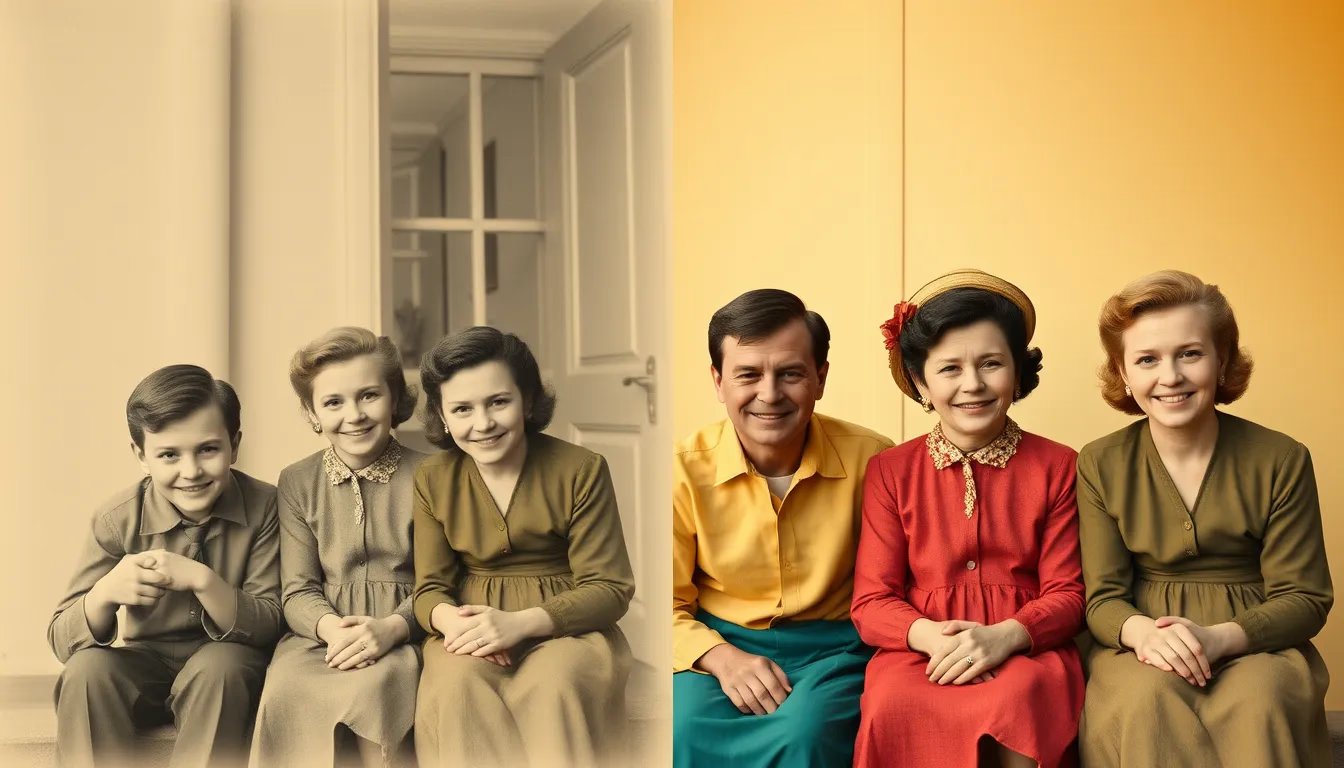
For families dealing with loss, photo merging offers deeply meaningful possibilities. Deceased relatives can be included in current family portraits through careful combination of historical photographs with contemporary images. When combined with AI photo restoration to enhance older source materials, these composites honour family members across generations.

Professional and Commercial Applications
Business applications for AI photo merging extend across numerous industries. Real estate professionals combine interior and exterior shots, create twilight versions from daytime photographs, or merge furnished room images with empty spaces to showcase potential. E-commerce sellers place products in lifestyle contexts without expensive location shoots.
Marketing teams leverage photo merging for campaign imagery that would otherwise require complex productions. Models photographed in studios appear in exotic locations, products demonstrate usage scenarios without physical setup, and seasonal variations emerge from single base photographs. This flexibility dramatically reduces production costs while expanding creative possibilities.
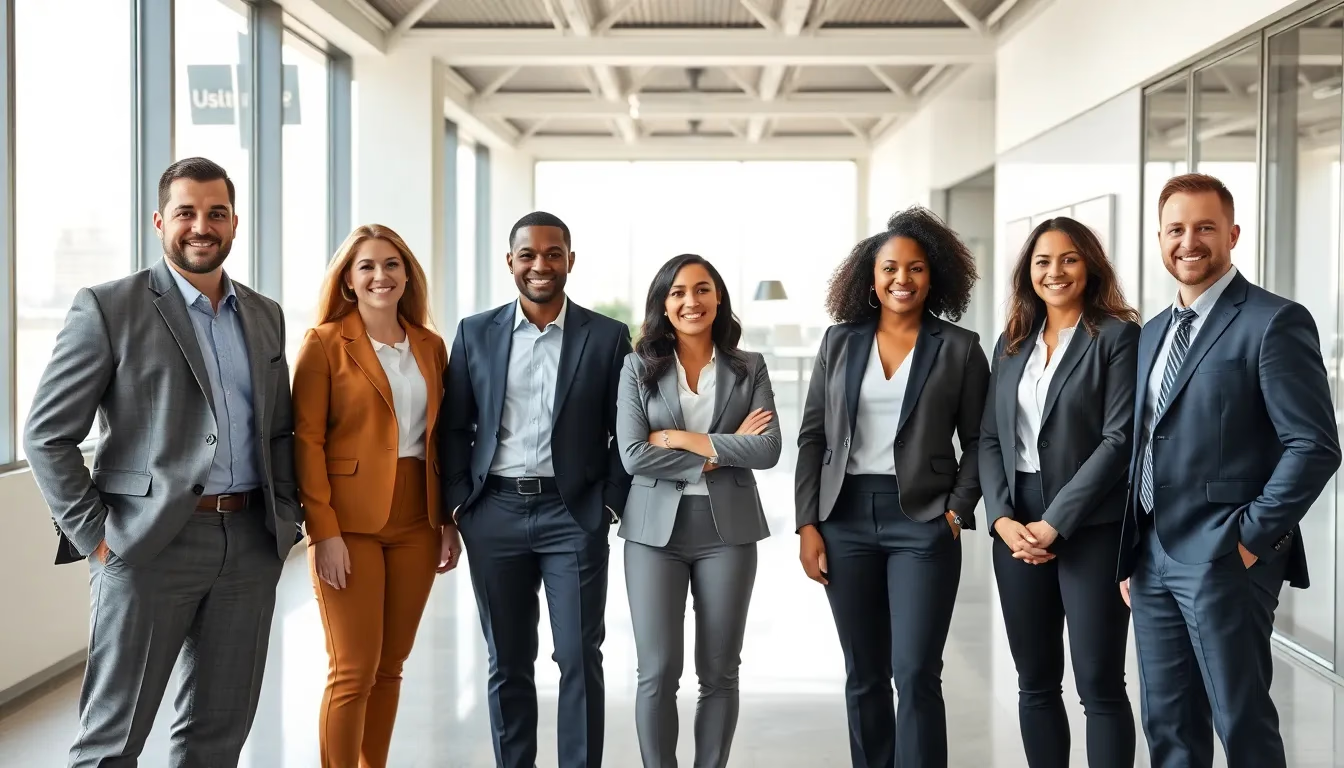
For professionals building their visual presence, merging technology enables sophisticated imagery. AI business team photos can incorporate team members who work remotely, creating unified corporate imagery despite distributed workforces. The technology ensures consistent professional quality across all merged elements.
Creative and Artistic Expression
Beyond practical applications, AI photo merging enables artistic expression previously accessible only to skilled digital artists. Double exposure effects that blend portraits with landscapes, surreal combinations that defy physical reality, and dreamlike compositions emerge from straightforward source images.
Creative photographers use merging technology to realise visions impossible to capture directly. Fantasy scenes combine real locations with imagined elements, conceptual portraits blend subjects with symbolic imagery, and artistic series maintain visual consistency across works created from diverse sources. AI handles technical execution while artists focus on creative vision.
The AI photo editor capabilities available through platforms like Photomize AI make these creative possibilities accessible to anyone with imagination. Complex techniques that once required years of software expertise now yield professional results through intuitive interfaces that prioritise creative expression over technical manipulation.
Step-by-Step Guide to Merging Photos with AI
Preparing Source Images for Best Results
Successful photo merging begins with thoughtful source image selection. While AI technology handles many alignment challenges automatically, starting with compatible source materials significantly improves final results. Similar lighting conditions, complementary perspectives, and adequate resolution in both images create foundations for seamless merging.
Consider lighting direction when selecting images to combine. Subjects lit from consistent angles merge more convincingly than those with opposing illumination. While AI can adjust shadow positions, matching lighting from the start produces more natural results with fewer visible adjustments.
Resolution matters significantly for merged images. The final composite can only be as detailed as its lowest-quality source. Ensure both images offer sufficient resolution for intended use, whether social media sharing or large-format printing. Upscaling low-resolution sources before merging often introduces artifacts that undermine final quality.
Executing the Merge Process
Modern AI merging platforms simplify the combination process dramatically. Upload both source images, identify which elements to extract from each, and let intelligent algorithms handle the complex blending work. The technology analyses both images, identifies optimal integration approaches, and applies sophisticated processing to achieve seamless results.
Most platforms offer adjustment controls for fine-tuning merged results. Positioning sliders enable precise placement of combined elements, blending controls adjust how aggressively edges integrate, and colour matching options ensure harmonious tones across the composite. These controls provide creative flexibility while AI handles technical execution.
Iterative refinement often produces best results. Initial merges reveal how elements interact, suggesting adjustments to positioning, scale, or blending that improve subsequent attempts. Don't hesitate to experiment with different configurations – AI processing speed enables rapid exploration of creative possibilities.

Refining and Enhancing Merged Results
Post-merge enhancement often elevates good composites to excellent ones. Unified colour grading across the entire merged image creates visual cohesion that reinforces the illusion of single-capture origin. Global adjustments to contrast, saturation, and tone treat all elements identically, binding them into convincing wholes.
Edge refinement addresses any remaining integration artifacts. While AI handles most blending automatically, complex edges sometimes benefit from additional attention. Feathering adjustments, localised blur applications, and selective sharpening can perfect transitions between merged elements.
For merged portraits specifically, techniques covered in our guide to AI portrait retouching apply equally to composite images. Skin smoothing, eye enhancement, and colour correction unify the appearance of subjects originally photographed under different conditions.
Advanced Techniques and Creative Possibilities
Multiple Image Composites
While basic merging combines two photographs, advanced applications layer multiple images into complex composites. Group portraits assembled from individual shots, panoramic scenes stitched from overlapping captures, and elaborate fantasy compositions incorporating dozens of elements all build upon fundamental merging principles.
Layered compositing requires careful attention to depth relationships. Elements must stack logically, with appropriate occlusion and scale relationships maintaining spatial believability. AI assists by analysing scene depth and suggesting layer ordering, but creative oversight ensures compositional success.
Style Transfer and Artistic Effects
Beyond literal combination, AI enables stylistic merging that blends aesthetic qualities rather than just visual elements. A portrait can acquire the colour palette of a sunset, a landscape can inherit the textural quality of an oil painting, and photographs can merge with artistic styles to create unique hybrid imagery.
These techniques extend naturally into colorizing black and white photos, where historical images gain colour characteristics from reference photographs. Vintage portraits acquire natural skin tones based on contemporary colour images, creating colourised results with authentic, believable palettes.
Achieving Professional Quality Results
Common Mistakes and How to Avoid Them
Scale inconsistencies immediately betray amateur composites. Heads too large for bodies, people impossibly sized relative to surroundings, and objects that violate expected proportions all undermine believability. Always verify scale relationships against reference points – doorways, furniture, and other known-size objects anchor realistic proportions.
Lighting mismatches rank among the most common merging failures. Even subtle differences in illumination direction create subconscious unease in viewers. Analyse shadow directions in both source images before merging, and consider whether AI adjustments can adequately reconcile any differences.
Resolution disparities between merged elements create jarring quality transitions. Sharp subjects against soft backgrounds, or vice versa, immediately appear artificial. Match source image quality as closely as possible, and apply consistent sharpening or softening to unified final composites.
Quality Assurance for Merged Images
Review merged images at multiple zoom levels. Distant viewing reveals compositional issues and gross mismatches, while close inspection exposes edge artifacts and blending imperfections. Both perspectives matter for professional-quality results intended for varied display contexts.
Fresh eyes catch issues familiarity masks. Step away from merged images before final approval, returning later with renewed objectivity. Alternatively, show composites to others whose unfamiliarity with source materials enables them to spot incongruities you've become blind to through repeated viewing.
Compare merged results against reference photographs of similar scenes. Does your family portrait composite look like an actual group photograph might? Do lighting, positioning, and interaction between subjects appear natural? Reference comparison grounds creative work in visual reality.
Conclusion: Unleashing Creative Vision Through AI Merging
AI photo merging technology transforms creative vision into visual reality. Concepts that once required professional expertise and extensive manual work now emerge through intelligent algorithms that handle technical complexity automatically. From practical family portraits spanning continents to artistic visions transcending physical possibility, merging technology expands what photographs can achieve.
The accessibility of these tools democratises creative expression. Anyone can now combine images with professional-quality results, telling visual stories that single captures cannot convey. Whether preserving family memories, creating professional marketing imagery, or exploring artistic possibilities, AI merging provides the technical foundation for unlimited creative exploration.
As you experiment with photo merging, remember that technology serves creative vision rather than replacing it. AI handles blending, matching, and technical refinement – but the creative decisions about what to combine and why remain uniquely human. Use these powerful tools to realise your visual imagination, creating merged images that communicate, inspire, and connect.