
The Emotional Power of Colour in Historical Photography
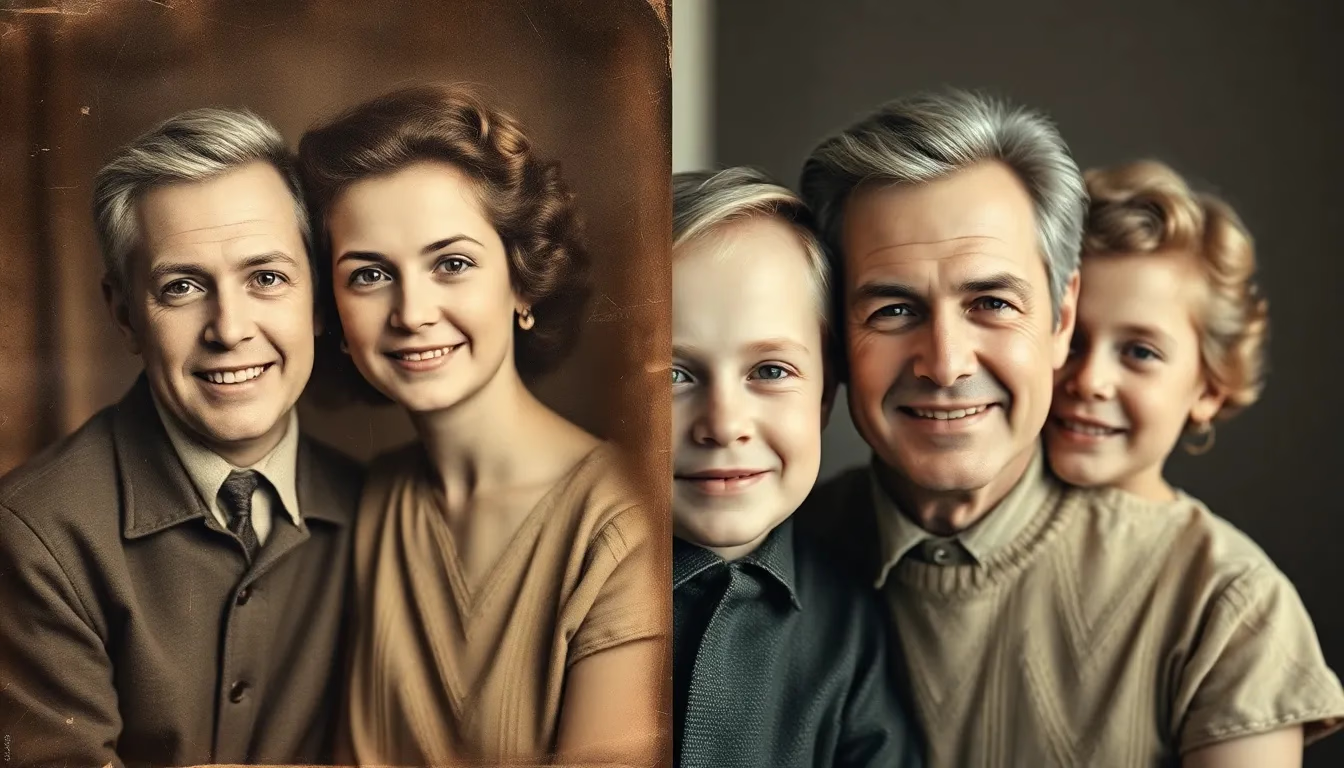
Black and white photographs capture moments frozen in time, yet something profound happens when colour enters these historical frames. Monochrome images, however beautiful, create psychological distance – a subtle reminder that these moments belong to another era, separated from our present reality by the absence of the colour we experience daily.
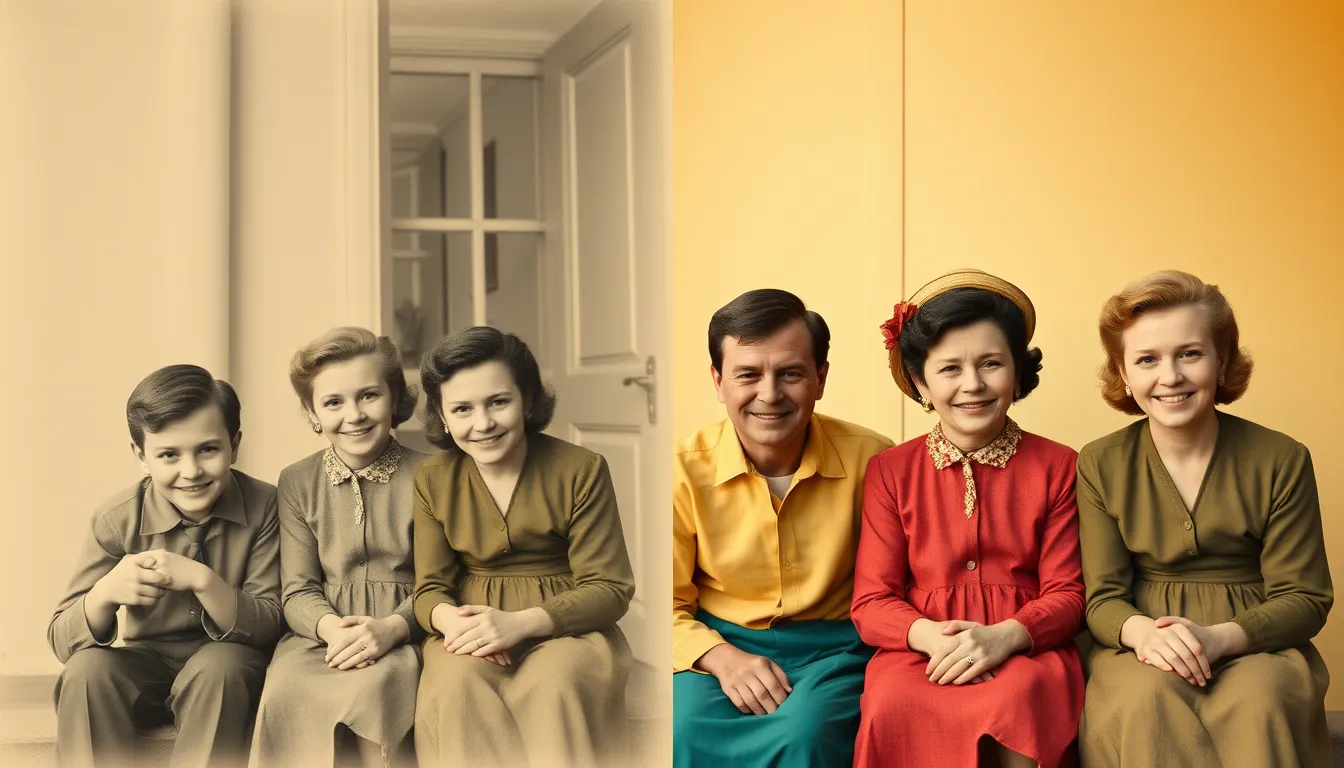
When grandmother's wedding portrait suddenly reveals her auburn hair, when great-grandfather's military uniform displays its proper olive drab, when a childhood home shows the actual blue of its painted shutters – these transformations create immediate emotional connections. Colour bridges temporal gaps, reminding us that historical figures lived in worlds as vibrant and nuanced as our own.
Traditionally, colorizing photographs required exceptional artistic skill and painstaking manual effort. Professional colorists spent hours researching period-accurate hues, carefully painting digital layers, and blending tones to achieve natural results. This expertise commanded premium prices and lengthy turnaround times, placing quality colorization beyond reach for most families seeking to revive treasured memories.
AI colorization has democratised this transformative process. Intelligent algorithms now analyse monochrome images, recognise content contextually, and apply appropriate colours with remarkable accuracy – often producing results in seconds that rival hours of professional manual work.
Understanding AI Colorization Technology
How Neural Networks Interpret Greyscale Values
Artificial intelligence approaches colorization fundamentally differently from human artists. While skilled colorists rely on historical knowledge, artistic intuition, and careful observation, AI systems leverage pattern recognition developed through training on millions of colour photographs and their greyscale conversions.
Neural networks learn relationships between luminosity values and probable colours. They understand that certain grey tones in specific contexts typically correspond to particular hues – skin occupies predictable ranges, foliage falls within green spectrums, skies tend toward blues. More sophisticated models recognise that context matters enormously: the same grey value might represent blonde hair in one region of an image and golden wheat in another.
Deep learning architectures analyse images at multiple scales simultaneously. They consider individual pixels, local regions, and global image context together, ensuring colour choices remain consistent and plausible throughout the photograph. This multi-scale analysis prevents the jarring colour inconsistencies that plagued earlier automated colorization attempts.
Modern AI colorization models also incorporate semantic understanding. They recognise faces, clothing, architecture, vehicles, and countless other elements, applying category-appropriate colour palettes. A 1940s automobile receives period-correct paint colours; military uniforms display historically accurate shades; skin tones vary naturally across different lighting conditions.
The Training Process Behind Accurate Results
Creating effective AI colorization requires extensive training data and sophisticated learning approaches. Developers compile vast datasets of high-quality colour photographs spanning different eras, subjects, and lighting conditions. These images are converted to greyscale, creating paired examples that teach networks the relationship between monochrome inputs and colour outputs.
Training involves presenting the network with greyscale images and comparing its colour predictions against known correct answers. Through millions of iterations, the system refines its understanding, learning subtle nuances that distinguish natural-looking results from artificial-seeming outputs. Networks develop implicit knowledge about colour relationships, lighting physics, and material properties.
Advanced training techniques incorporate perceptual loss functions that evaluate results based on how humans perceive quality rather than simple pixel-by-pixel accuracy. This approach produces outputs that appear natural to human observers even when they differ slightly from ground truth values – prioritising aesthetic quality over mathematical precision.
Practical Applications for Family History
Reviving Ancestral Photographs
Family photographs represent irreplaceable connections to personal history. Parents and grandparents who exist only in faded monochrome prints suddenly become more relatable, more real, when their images display natural colour. Children connect more readily with ancestors whose photographs match the colourful world they know.
AI colorization works particularly well for formal portraits common in earlier photographic eras. Studio lighting typical of Victorian through mid-century portraiture provides consistent illumination that algorithms interpret reliably. Skin tones emerge naturally, clothing displays period-appropriate colours, and backgrounds receive subtle, realistic hues.
Casual snapshots also benefit tremendously from colorization. Picnic scenes reveal the actual colours of summer dresses and checkered blankets. Holiday gatherings show the warm tones of wooden furniture and the specific shades of wallpaper that defined childhood homes. These details, invisible in black and white, trigger memories and create connections impossible with monochrome images alone.
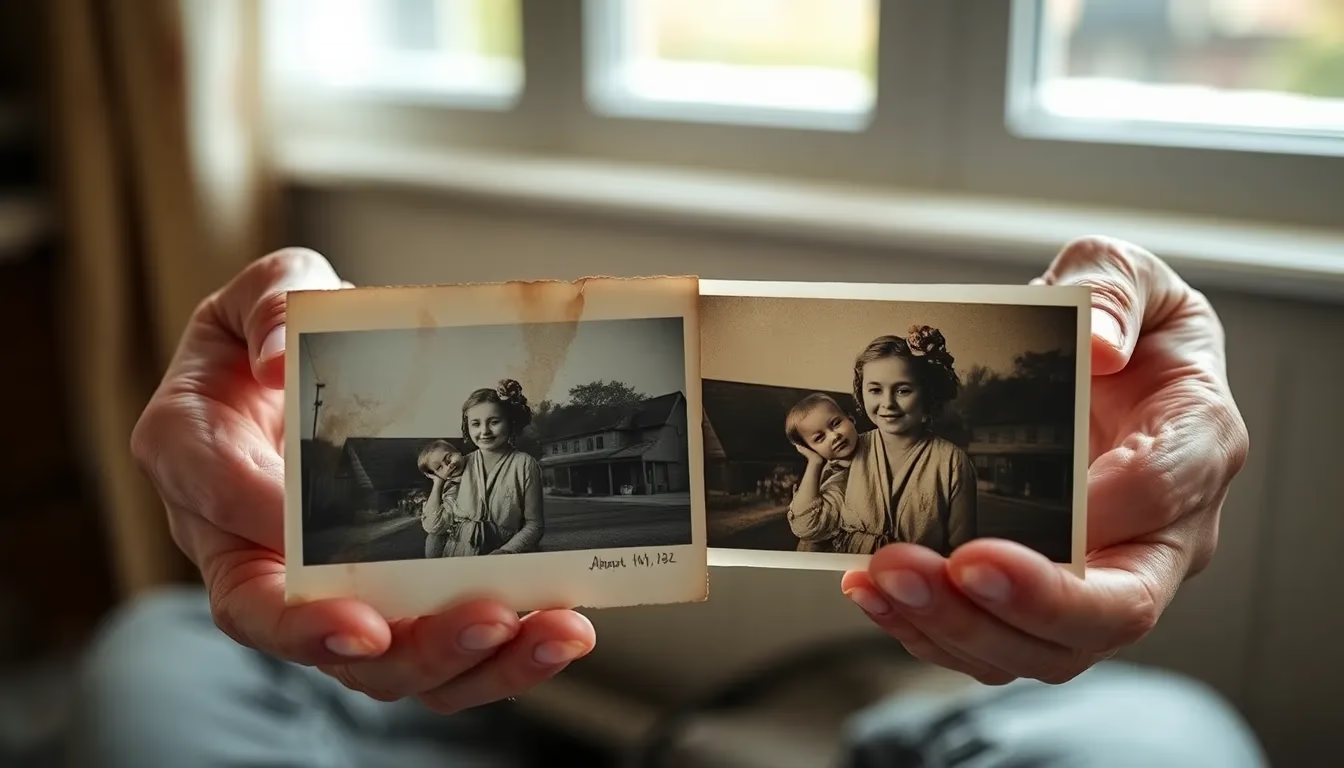
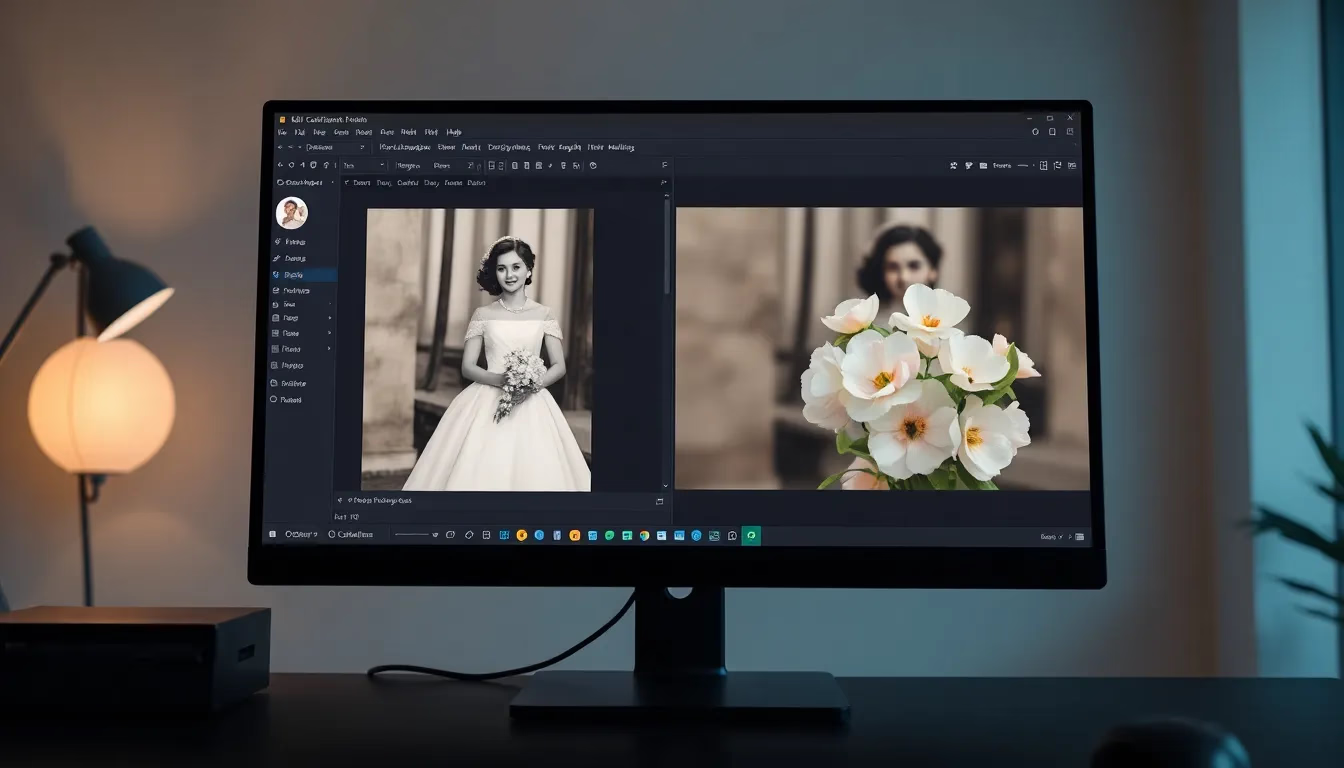
For those working with damaged historical photographs, combining colorization with comprehensive AI photo restoration produces remarkable results. Scratches, tears, and fading can be addressed alongside the addition of colour, transforming deteriorating prints into vibrant images suitable for display and sharing.
Creating Meaningful Family Gifts
Colorized photographs make exceptionally meaningful presents for family members, particularly elderly relatives who remember the subjects and settings depicted. Presenting grandparents with colour versions of their wedding photographs, childhood homes, or images of parents they lost decades ago creates profoundly emotional moments.
Reunion displays featuring colorized historical photographs alongside contemporary images create visual continuity across generations. Guests observe family resemblances more readily when historical and modern photographs share colour representation. These displays become conversation catalysts, prompting storytelling and memory sharing.
Memorial tributes gain emotional impact through colorization. Services honouring deceased relatives often display photograph collections; colorized versions create more immediate connections for attendees who never knew the departed in younger years. The vibrancy of colour suggests life and vitality, celebrating the person rather than emphasising temporal distance.
Achieving Optimal Colorization Results
Preparing Images for AI Processing
Input quality significantly influences colorization outcomes. High-resolution scans of original prints provide substantially more information for AI analysis than photographs of photographs or low-resolution digital copies. Investing time in proper scanning pays dividends in final results.
Scanning at 600 DPI or higher captures fine detail that helps algorithms interpret image content accurately. Facial features, fabric textures, and environmental details emerge more clearly at higher resolutions, enabling more precise colour application. Original prints should be cleaned gently before scanning to remove dust and debris that might confuse AI interpretation.
Minor restoration before colorization often improves results. Addressing severe damage, extreme fading, or major contrast problems provides cleaner input for colorization algorithms. An AI photo editor can handle preliminary restoration tasks efficiently, preparing images optimally for subsequent colorization.
Document any known information about image contents before processing. Noting that grandmother's eyes were blue, that the family car was dark green, or that the house had red brick helps evaluate and potentially refine colorization results. While AI produces plausible colours, family knowledge provides accuracy verification impossible through algorithms alone.
Understanding Limitations and Setting Expectations
AI colorization produces remarkably impressive results, yet understanding its limitations helps set appropriate expectations. Algorithms predict probable colours based on learned patterns – they cannot know with certainty that a particular dress was actually yellow rather than the predicted cream, or that specific eyes were hazel rather than brown.
Certain image elements present greater challenges than others. Highly detailed patterns, unusual materials, and objects the AI has encountered rarely during training may receive less accurate colours. Historical items specific to particular cultures or eras might be interpreted through more common visual references, requiring manual adjustment for accuracy.
Lighting conditions in original photographs influence colorization significantly. Strongly directional lighting, deep shadows, or unusual artificial illumination can confuse algorithms trained primarily on naturally lit images. Results remain impressive but may require refinement in challenging lighting scenarios.
Photomize AI provides sophisticated colorization capabilities that balance automated intelligence with user control, allowing refinement of results when family knowledge contradicts algorithmic predictions. This combination of AI efficiency and human oversight produces authentically accurate outcomes.
Advanced Techniques for Superior Results
Refining AI Colorization Output
Initial AI colorization provides excellent starting points that often require minimal refinement. However, for historically significant images or photographs where accuracy matters deeply, additional adjustment ensures results match reality rather than merely appearing plausible.
Colour temperature adjustments address systematic biases in AI output. Some algorithms tend toward warmer or cooler colour palettes; global temperature correction brings results closer to natural appearance. Saturation adjustments prevent colours from appearing either artificially vivid or disappointingly muted.
Selective colour editing addresses specific elements requiring correction. If family knowledge confirms that a colorized brown coat was actually navy blue, targeted adjustments change only the coat while preserving accurate colours elsewhere. Layer-based editing enables precise corrections without affecting successfully colorized regions.
Blending colorized versions with original monochrome creates artistic variations. Partially desaturated results maintain colour information while preserving some of the classic aesthetic of vintage photography. This approach suits display contexts where full colour might appear jarring alongside other period photographs.
Batch Processing Historical Collections
Families often possess dozens or hundreds of historical photographs worthy of colorization. Processing these individually proves time-consuming; batch capabilities dramatically accelerate collection-wide enhancement.
Consistent processing settings across image batches maintain visual coherence. Photographs from similar eras, locations, or lighting conditions benefit from unified colour palettes and saturation levels. This consistency proves particularly important when creating albums, slideshows, or display collections from processed images.
Organising images by subject matter before batch processing improves efficiency. Portraits, landscapes, and indoor scenes each present different colorization challenges; grouping similar images enables focused quality review and consistent refinement approaches.
For comprehensive guidance on broader image enhancement techniques that complement colorization, exploring AI photo editing online provides valuable context for complete workflow development.
Preserving and Sharing Colorized Memories
Digital Archiving Best Practices
Colorized photographs deserve careful digital preservation ensuring long-term accessibility. Saving results in lossless formats prevents quality degradation through repeated access and sharing. TIFF and PNG formats maintain full quality; JPEG serves well for sharing but introduces compression artifacts with repeated saves.
Maintaining original monochrome files alongside colorized versions preserves historical authenticity. Future colorization technology will inevitably surpass current capabilities; original files enable reprocessing with improved algorithms. Additionally, some contexts benefit from monochrome display even when colour versions exist.
Cloud backup protects colorized collections from local storage failures. Multiple backup locations provide redundancy against service outages or account problems. Family photograph collections represent irreplaceable heritage; appropriate backup practices ensure preservation for future generations.
Sharing Across Generations
Digital sharing platforms enable instant distribution of colorized photographs to dispersed family members. Email, messaging applications, and social media all facilitate sharing, though resolution and compression vary across platforms. For highest quality sharing, direct file transfer or dedicated photo sharing services preserve full resolution.
Physical prints of colorized photographs create tangible connections impossible through screens alone. Professional printing services produce gallery-quality output from high-resolution digital files. Framed prints make meaningful gifts and create focal points for family gathering spaces.
Creating photobooks combining colorized historical images with contemporary family photographs produces treasured keepsakes. These compilations document family heritage visually, providing future generations with accessible connections to their ancestors. The contrast between vintage colorized images and modern photographs creates compelling visual narratives.
Conclusion
AI colorization transforms how families connect with their photographic heritage. Technology that once required professional expertise and substantial investment now operates accessibly, producing results that bring historical images vividly to life.
The emotional impact of seeing ancestors in colour transcends mere technical achievement. These transformations create bridges across generations, reminding us that those who came before lived in worlds as vibrant and nuanced as our own. Monochrome distance dissolves; human connection strengthens.
Whether reviving single treasured portraits or processing entire family collections, AI colorization offers practical pathways to preserving and enhancing visual heritage. The technology continues advancing rapidly, yet current capabilities already produce genuinely impressive results accessible to anyone seeking to bring their black and white photographs to colourful life.