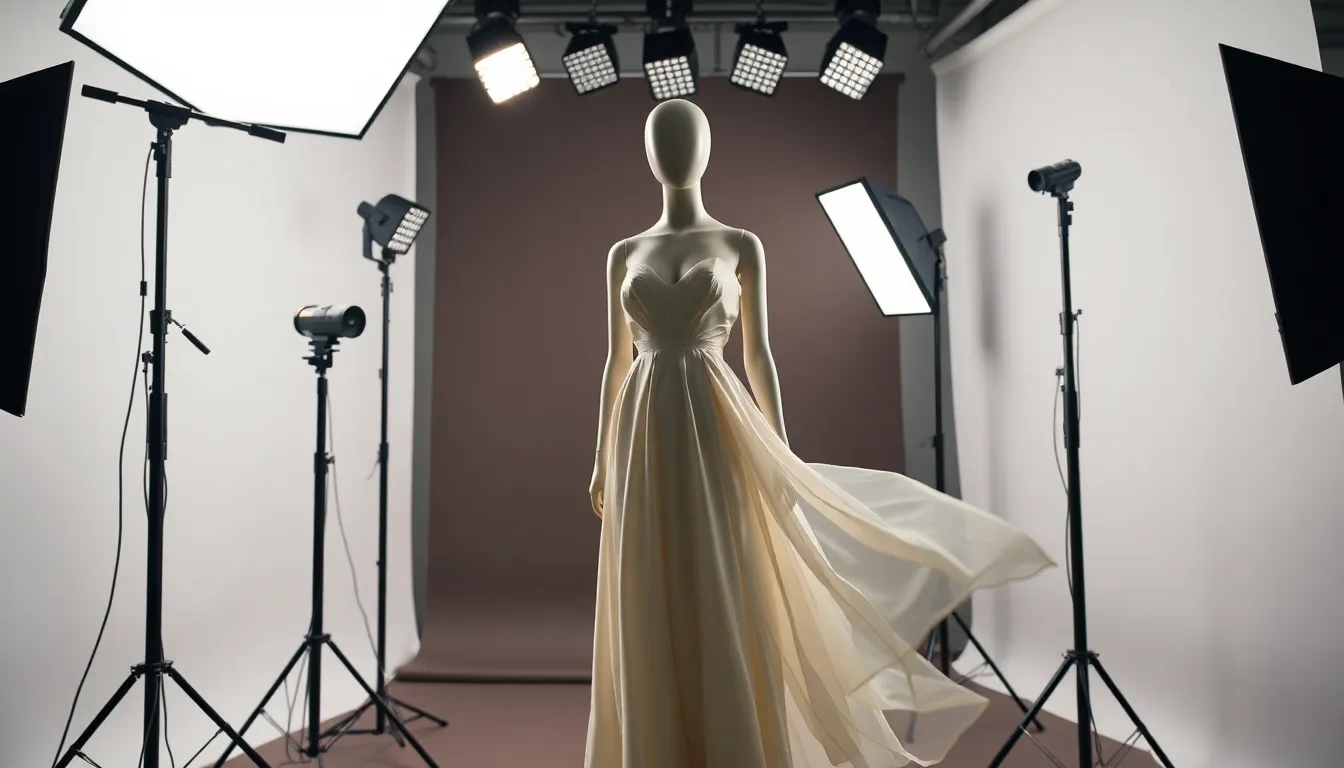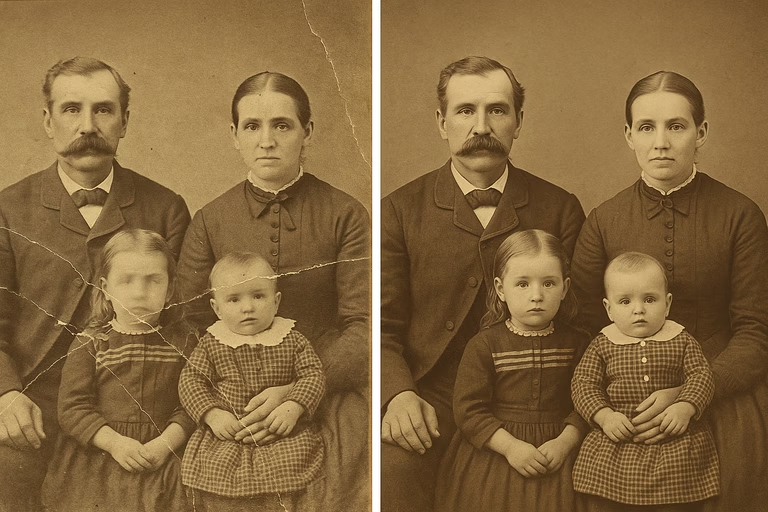
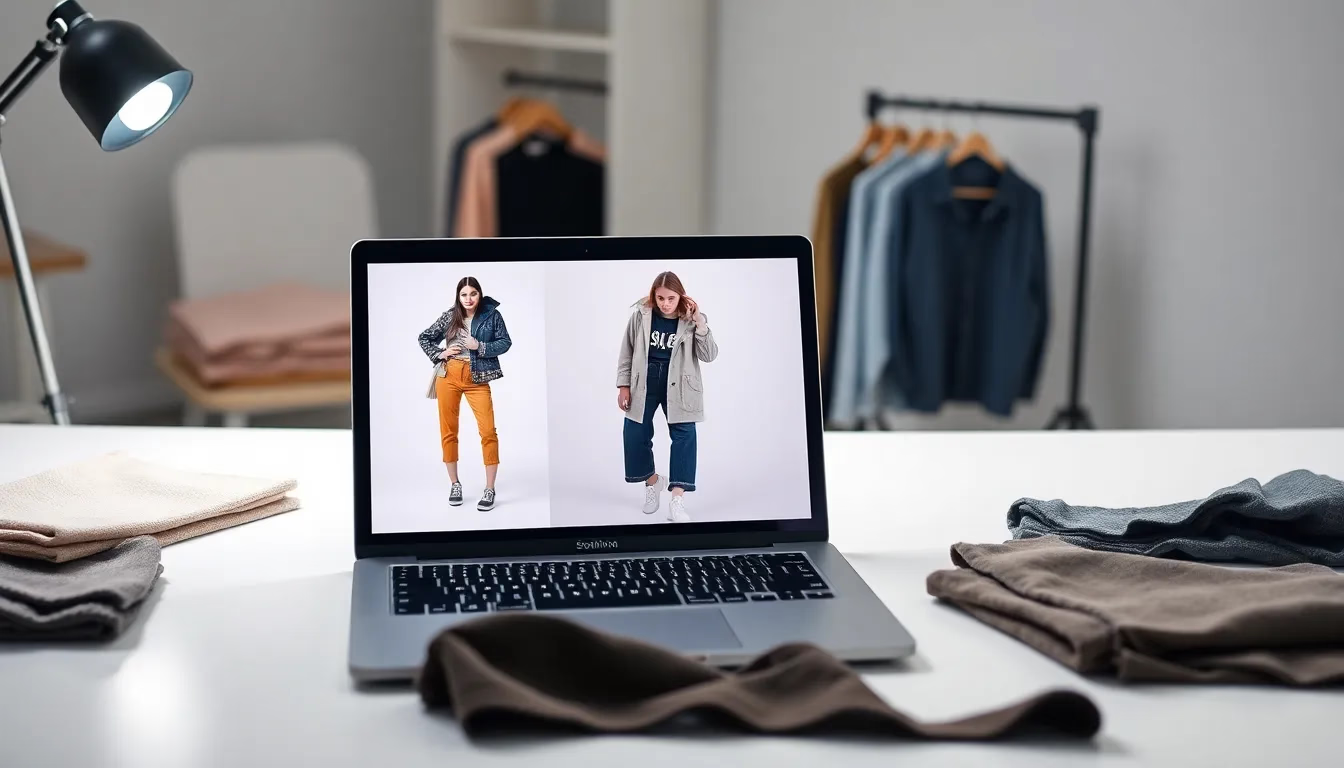

Fashion e-commerce has always demanded one thing above all else: showing customers how products look on real people. Before shoppers can feel fabric quality or assess fit, they rely on model photography to imagine themselves wearing your products. Studies reveal that product pages featuring model photos convert up to 200% better than flat-lay or mannequin alternatives. Yet traditional model photography creates significant barriers for growing fashion brands.
AI e-commerce model photos have fundamentally disrupted this dynamic. Today, fashion retailers of any scale can produce professional model imagery featuring diverse representations – without coordinating casting calls, booking studios, or managing complex photoshoot logistics.
The Fashion Photography Challenge
Every apparel seller understands the struggle. Customers want to see clothing on bodies that resemble their own. They need multiple angles, different styling options, and representations across various demographics. Meeting these expectations traditionally required substantial investment that many brands simply couldn't justify.
Consider the mathematics of a single product photoshoot. Model fees range from $200-2000 per day depending on experience and market. Studio rental adds another $500-1500. Hair, makeup, and styling professionals contribute additional costs. A photographer and their assistant require compensation. Post-production editing extends timelines and budgets further.
For a modest catalog of 100 products, each needing just three model shots, you're looking at hundreds of individual images. The cost per image quickly becomes unsustainable for emerging brands competing against established retailers with dedicated photography budgets.
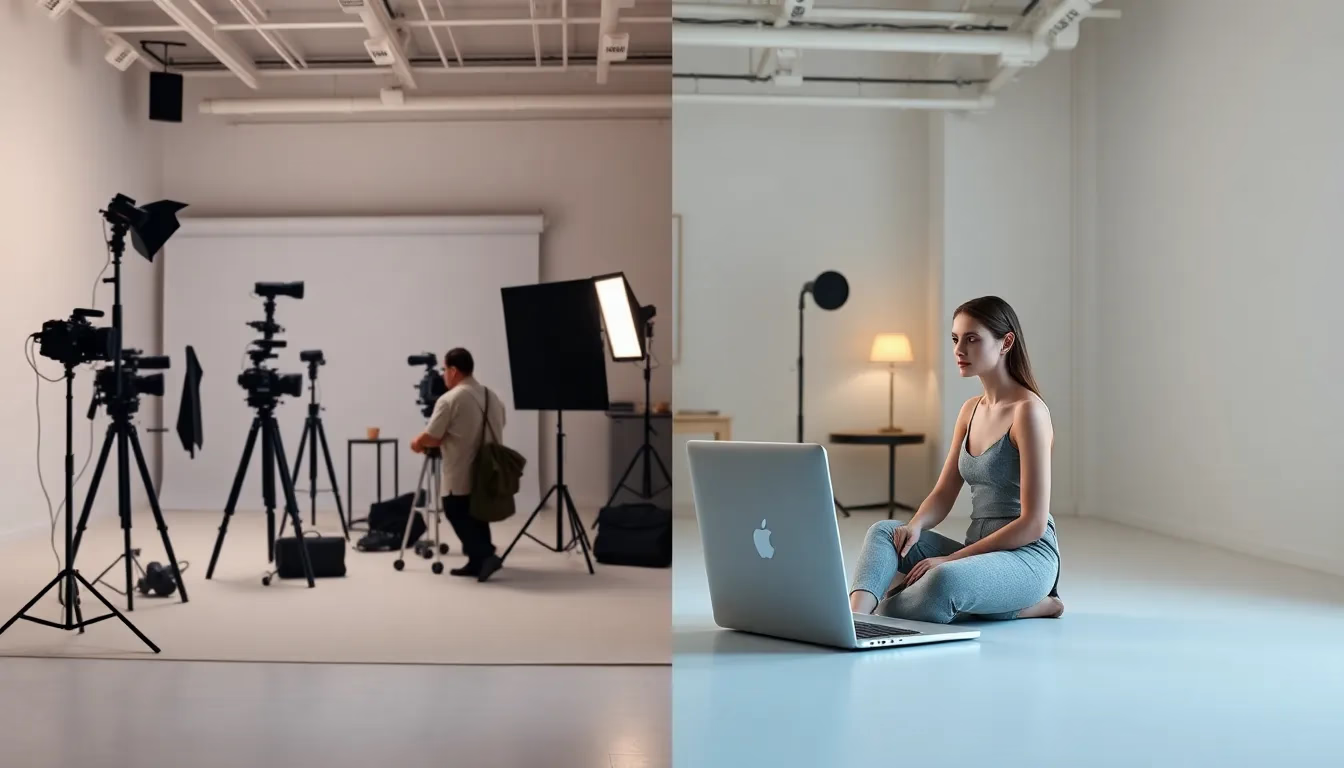
Smaller fashion businesses often compromised with flat-lay photography, ghost mannequins, or limited model shots that couldn't compete visually with major competitors. The disparity showed in conversion rates, return rates, and overall brand perception.
How AI Transforms Fashion Model Photography
Virtual Model Generation
The most revolutionary application involves generating photorealistic models wearing your actual products. Advanced AI systems can now create convincing human figures in virtually any pose, body type, age range, or ethnicity. These generated models can then be dressed in your garments through sophisticated image synthesis.
This capability eliminates the most expensive variable in fashion photography – the human element. No casting, no scheduling conflicts, no model fatigue during long shoot days. Products can be photographed once and then virtually placed on unlimited model variations.
Photomize AI specializes in creating these photorealistic model generations, ensuring clothing drapes naturally and maintains accurate color representation across different virtual body types.
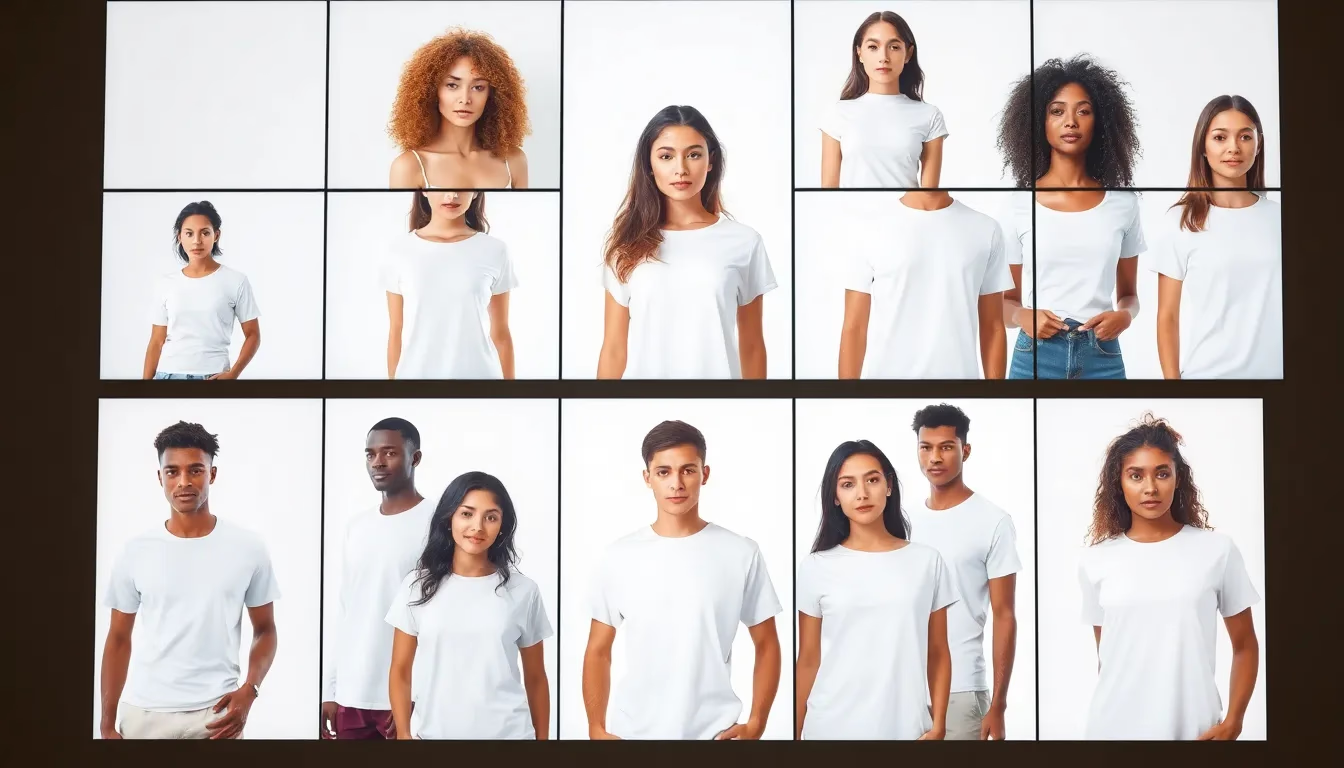
Diverse Representation at Scale
Traditional photoshoots inherently limit representation. Budget constraints typically mean one or two models per product. Customers who don't see themselves represented often hesitate to purchase, uncertain how garments might look on their specific body type.
AI model generation removes these constraints entirely. The same product can appear on models representing dozens of different demographics within minutes. Age ranges, body types, skin tones, and style aesthetics can all be varied without additional production costs.
This democratization of representation isn't just ethically valuable – it directly impacts revenue. When customers see products on models who resemble them, purchase confidence increases dramatically. Return rates decrease because expectations align more closely with reality.
Consistent Styling and Backgrounds
Maintaining visual consistency across large catalogs challenges even well-resourced photography operations. Different shoot days mean different lighting conditions. Model availability changes. Styling choices vary between creative directors.
AI-generated model photos eliminate these inconsistencies. Every image can maintain identical lighting quality, background treatment, and styling approach. This consistency strengthens brand identity and creates cohesive shopping experiences that build customer trust.
For deeper understanding of how AI handles these technical image improvements, explore our guide on AI image quality enhancement and its effects.
Practical Implementation Strategies
Starting With Product Photography
Successful AI model photo generation begins with quality product images. While AI can work wonders, it requires clear source material showing garment details, colors, and construction accurately.
Capture products against neutral backgrounds with even lighting. Multiple angles help AI systems understand how fabric falls and how garments are constructed. Close-up detail shots ensure texture reproduction remains accurate when scaled to full model images.
Our comprehensive AI product photography guide covers foundational techniques that translate directly to model photo preparation.
Selecting Appropriate Model Types
Different products benefit from different model presentations. Athletic wear demands dynamic poses showing movement capability. Professional attire requires more formal, structured positioning. Casual clothing allows relaxed, approachable stances.
Consider your target demographic when selecting virtual model characteristics. Luxury brands might emphasize elegance and aspiration. Accessible fashion brands benefit from relatable, everyday representations. Youth-focused lines demand contemporary styling and energetic poses.
AI platforms typically offer extensive customization options. Body measurements, facial features, age indicators, and styling elements can all be adjusted to align with brand positioning and customer expectations.
Maintaining Authenticity
The most effective AI model photos balance idealization with authenticity. Overly perfected images trigger skepticism among sophisticated online shoppers who've learned to distrust heavily manipulated photography.
Subtle imperfections – a slight asymmetry, natural skin texture, realistic fabric behavior – create believability that drives conversion. The goal isn't creating impossible beauty standards but showing products on attractive, relatable human figures.
Test different approaches with your specific audience. Some customer segments respond better to aspirational imagery while others prefer accessible realism. A/B testing different model styles reveals what resonates with your particular market.
Integration With Broader Marketing
Social Media Content Creation
AI model photos extend beyond product pages into comprehensive marketing content. Social media demands constant fresh imagery featuring products in varied contexts. Traditional photography struggles to maintain this content velocity.
Generated model photos can populate Instagram feeds, Pinterest boards, and TikTok content without exhausting photography budgets. Seasonal campaigns, trend responses, and promotional content all become more feasible when model imagery generation happens in hours rather than weeks.
Video Content Possibilities
The same AI capabilities transforming still photography are advancing into motion. While full video generation remains emerging technology, combining AI model photos with subtle animation creates engaging content that outperforms static images.
For brands exploring video advertising, our guide on AI video generation for ads examines how automated creative production maximizes marketing ROI while reducing production complexity.
Email Marketing Enhancement
Personalized email campaigns perform dramatically better than generic broadcasts. AI model generation enables visual personalization at scale – showing products on models that match subscriber demographics or past purchase patterns.
Segmented email campaigns featuring demographically appropriate model imagery see higher open rates, click-through rates, and conversion rates. The technical capability now exists to dynamically generate model images tailored to individual recipient profiles.

Addressing Common Concerns
Quality and Realism
Early AI-generated images suffered from uncanny valley problems – something looked wrong even if viewers couldn't identify specific issues. Current generation technology has largely overcome these limitations for e-commerce applications.
Professional Photomize AI generated model photos now pass casual inspection from most viewers. Close examination by photography professionals might reveal subtle tells, but standard e-commerce viewing conditions don't expose these limitations.
Quality continues improving rapidly. Images that seemed impressive six months ago already appear dated compared to current capabilities. Investing in AI model photography positions brands to benefit from ongoing technological advancement.
Legal and Ethical Considerations
AI-generated models raise legitimate questions about disclosure, intellectual property, and representation ethics. Different jurisdictions are developing varying regulatory frameworks around synthetic media in commercial applications.
Transparency generally serves brands well. Many successful e-commerce operations now explicitly note when imagery features AI-generated models. This honesty builds trust rather than undermining it, particularly among younger demographics comfortable with AI technology.
Ensure generated models don't inadvertently replicate existing individuals' likenesses. Reputable AI platforms implement safeguards against generating recognizable faces, but verification remains important.
Balancing AI and Traditional Photography
AI model photography doesn't necessarily replace all traditional photoshoots. Many brands find optimal results combining approaches – using traditional photography for hero images and campaigns while leveraging AI for catalog scale and variation.
Lookbook and editorial content often benefits from the spontaneity and authenticity of real photoshoots. Product pages and catalog listings leverage AI efficiency. The appropriate mix depends on brand positioning, budget constraints, and specific use cases.
Measuring Success
Key Performance Indicators
Track specific metrics when implementing AI model photography. Conversion rate changes on product pages provide the most direct success indicator. Compare pages with AI model photos against previous flat-lay or mannequin imagery.
Return rates often decrease when customers see products on representative models. Better purchase confidence means fewer disappointed customers sending back items that didn't meet expectations.
Page engagement metrics – time on page, scroll depth, image zoom interactions – indicate whether AI-generated imagery captures attention effectively. Social sharing rates reveal whether images meet quality thresholds for organic distribution.
Continuous Optimization
AI model photography enables rapid testing impossible with traditional photoshoots. Different model demographics, poses, styling approaches, and backgrounds can all be tested systematically to identify optimal combinations for your specific products and customers.
This testing capability represents a fundamental advantage over traditional photography. Rather than committing to specific creative directions during expensive photoshoots, brands can iterate continuously based on performance data.
The Competitive Landscape
Fashion e-commerce grows more competitive annually. Customer acquisition costs rise steadily. Conversion optimization becomes increasingly critical for sustainable unit economics.
Brands investing in AI model photography gain measurable advantages – lower content production costs, faster time-to-market for new products, and superior representation across customer demographics. These advantages compound over time as capabilities improve and operational expertise develops.
Early adopters establish workflows, build institutional knowledge, and develop optimization frameworks that later entrants must accelerate to match. The technology maturity has reached the point where implementation risk has diminished substantially while competitive advantages remain significant.
The fashion brands thriving in coming years will be those treating visual content creation as a strategic capability rather than a necessary expense. AI model photography transforms this equation fundamentally – turning imagery from a cost center into a competitive advantage.