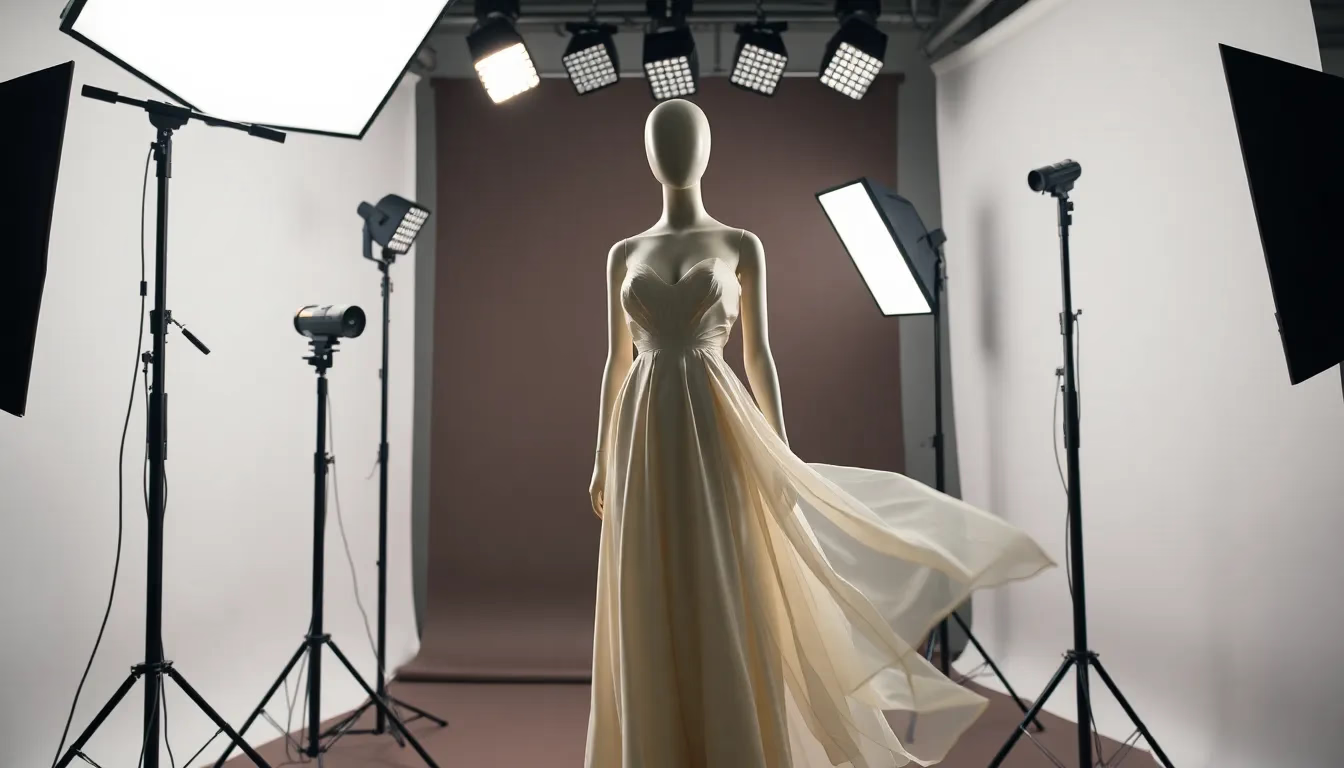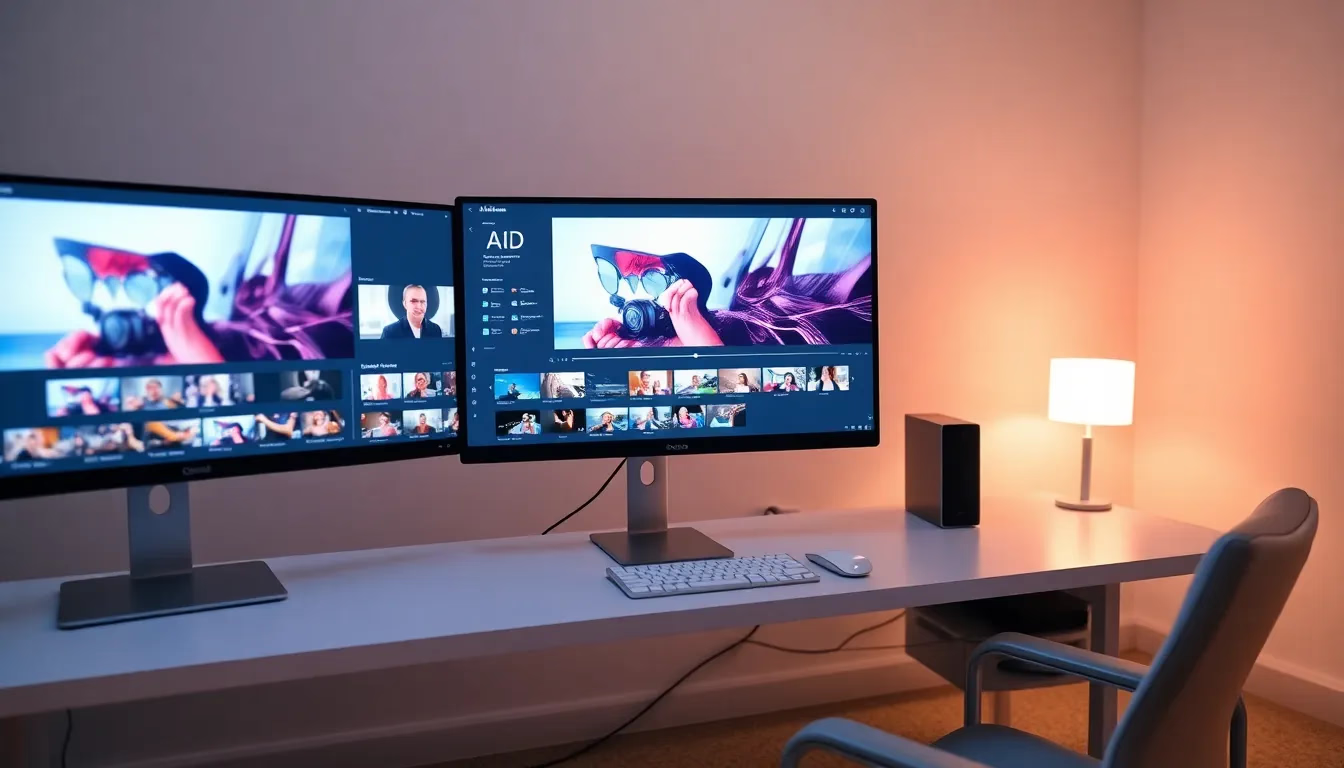


Product photography has always been the silent salesperson of e-commerce. Before customers can touch, smell, or try your products, they rely entirely on images to make purchasing decisions. Research consistently shows that 75% of online shoppers consider product photos the most influential factor in their buying decisions. Yet until recently, creating professional product imagery required significant investment in equipment, studio space, and photography expertise.
AI product photography has fundamentally changed this equation. Today, businesses of any size can produce studio-quality product images that rival those from major brands – without the traditional barriers of cost, time, and technical expertise.
The E-commerce Image Problem
Every online seller faces the same challenge. Products need professional presentation to compete. Customers expect clean backgrounds, consistent lighting, multiple angles, and lifestyle context. Meeting these expectations traditionally meant hiring photographers, renting studio time, purchasing expensive equipment, or outsourcing to product photography services.
Small businesses and individual sellers often compromised with smartphone photos and improvised setups. The results rarely competed with established brands that invested heavily in professional imagery. This visual gap directly impacted conversion rates, customer trust, and brand perception.
The mathematics were simple but frustrating. Professional product photography might cost $25-100 per image. A catalog of 500 products requiring multiple angles each could demand five-figure investments just for imagery. For businesses with tight margins or seasonal inventory, these costs were prohibitive.
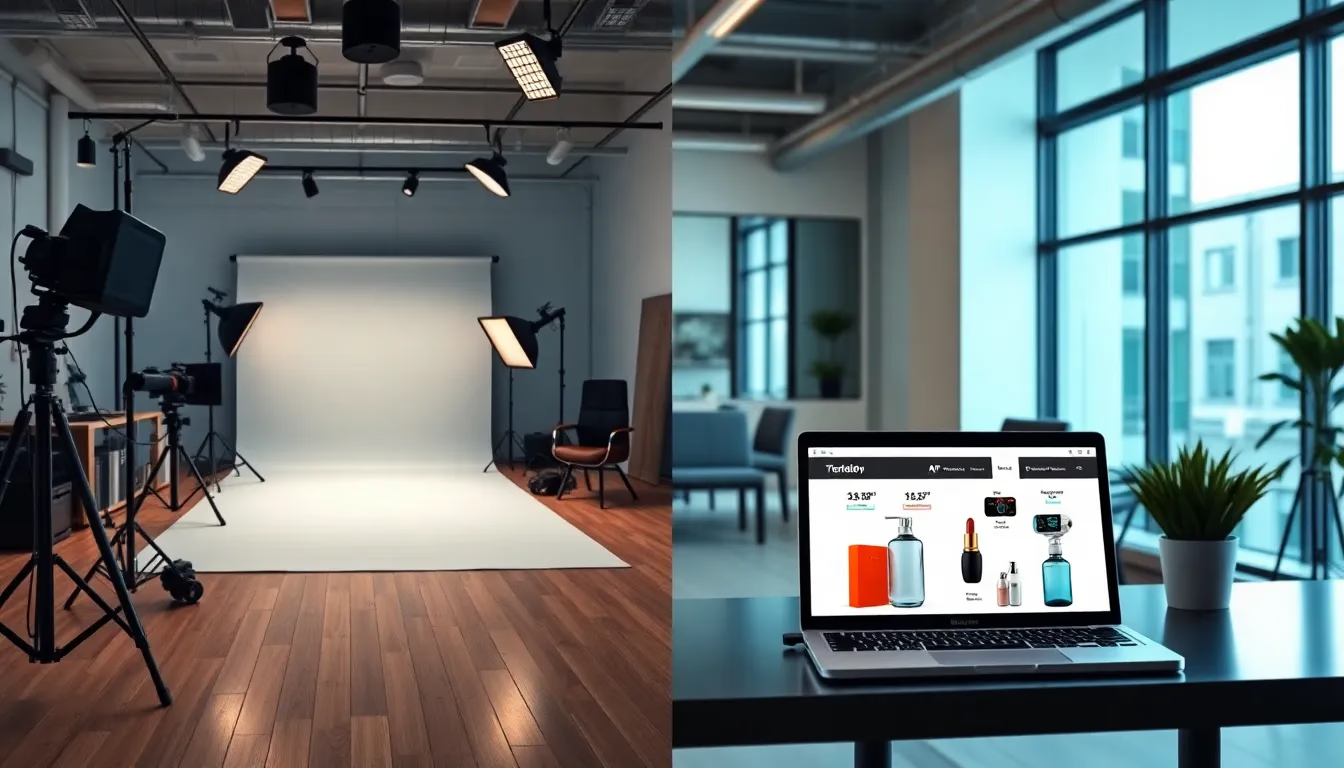
How AI Transforms Product Photography
Background Removal and Replacement
The most immediate application of AI in product photography involves background manipulation. Traditional product shoots require clean backgrounds, proper lighting setups, and careful positioning. AI tools can now extract products from any photograph and place them against pure white backgrounds, gradient surfaces, or contextual lifestyle settings.
This capability alone saves hours of post-production work previously required for each image. A product photographed on a kitchen counter can appear on a pristine white e-commerce background within seconds. The same product can then be placed in multiple lifestyle contexts without additional photography sessions.
Photomize AI offers sophisticated background manipulation that maintains natural shadows and reflections, ensuring products look genuinely placed rather than awkwardly pasted.
Lighting Enhancement and Correction
Professional product photography depends heavily on lighting. Soft boxes, reflectors, and careful positioning create the dimension and appeal that sells products. Poor lighting flattens products, creates harsh shadows, and undermines perceived quality.
AI enhancement tools analyze lighting patterns and correct deficiencies automatically. Underexposed products gain proper illumination. Harsh shadows soften naturally. Color casts from mixed lighting sources disappear. The technology essentially applies professional lighting principles to photographs that were captured under less-than-ideal conditions.
This doesn't mean any photograph becomes professional-grade, but it significantly elevates baseline quality and reduces the gap between amateur captures and studio shots. For businesses transitioning to AI-enhanced workflows, understanding how AI image quality enhancement works provides valuable context for maximizing results.
Complete Image Generation
The most advanced AI product photography applications generate entirely new images from reference photos or even text descriptions. Upload existing product images, and AI can create new angles, alternative color variations, or lifestyle placements that never existed in the original photography.
This capability proves particularly valuable for products available in multiple colors or configurations. Rather than photographing each variation separately, AI generates accurate representations from a single reference image. A furniture piece photographed in oak finish can appear in walnut, white, or black variations without additional photography sessions.
Practical Applications Across Industries
Fashion and Apparel
Clothing photography presents unique challenges. Garments need to appear on models or mannequins to show fit and drape. Traditional approaches require model bookings, fitting sessions, and extensive shoots for each new collection.
AI tools now generate virtual try-on images, placing garments on digital models with realistic fit and fabric behavior. This approach enables rapid catalog expansion without proportional increases in photography costs. Seasonal collections can launch with complete imagery faster than traditional workflows allowed.
Jewelry and Accessories
Small products like jewelry demand macro photography skills and specialized lighting. Reflective surfaces complicate exposure and create unwanted hotspots. Traditional jewelry photography required significant expertise and equipment investment.
AI enhancement handles reflective surfaces more effectively than basic editing tools. Background generation creates elegant presentation contexts – velvet surfaces, marble slabs, or lifestyle settings – without physical props or studio setups.
Food and Beverage
Food photography is notoriously difficult. Products must look appetizing, fresh, and appealing. Traditional food shoots involved food stylists, careful timing, and multiple takes as products wilted or melted under studio lights.
AI can enhance food imagery, improve color saturation naturally, and generate appealing presentation contexts. While it doesn't replace skilled food photography for hero images, it significantly elevates everyday product shots for menus, catalogs, and social content.
Electronics and Technology
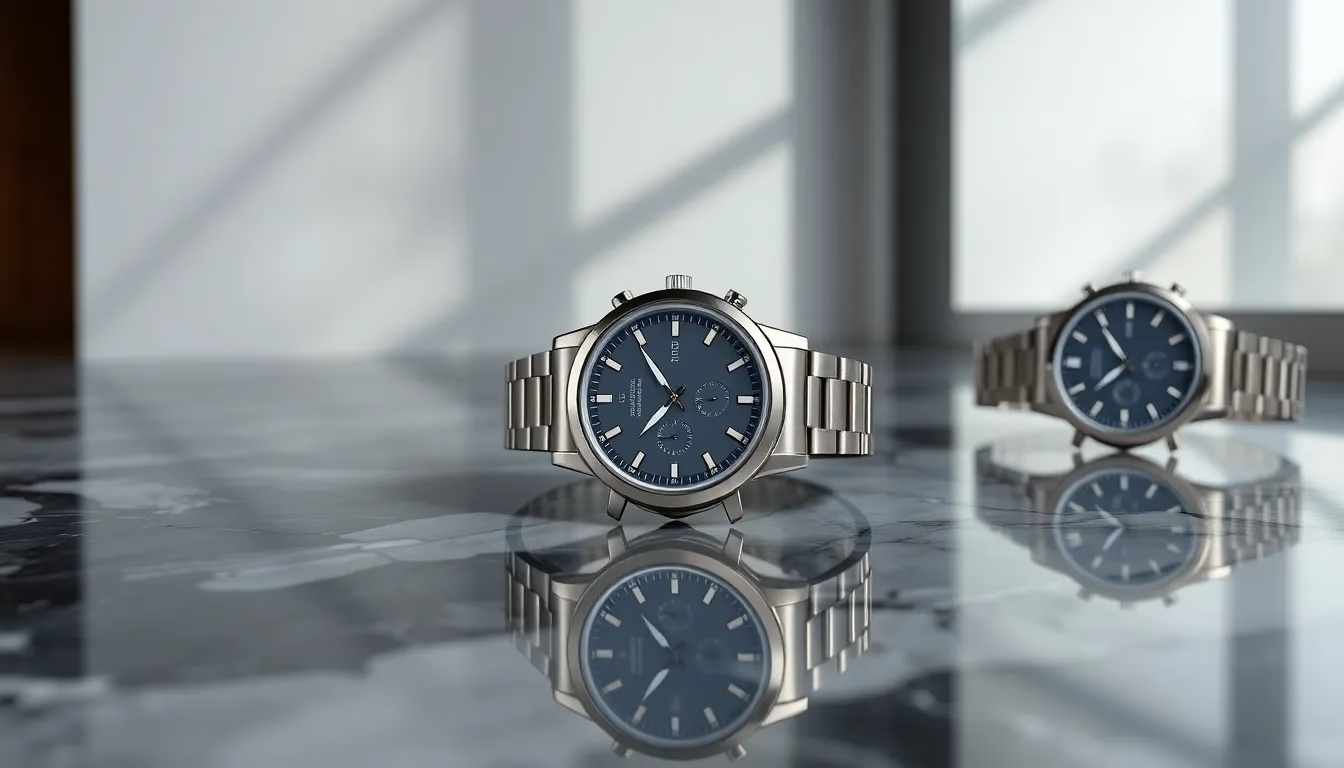
Tech products benefit from clean, minimalist presentation that emphasizes design and features. AI tools excel at creating the consistent, professional aesthetic that electronics photography demands. Reflective screens and metallic surfaces – traditionally challenging elements – can be handled with AI enhancement tools that control reflections and maintain material accuracy.
Building an AI Product Photography Workflow
Step 1: Capture Quality Source Material
AI enhancement amplifies what exists in your original images. Starting with decent source material produces dramatically better results than attempting to rescue poorly captured photos. This doesn't require professional equipment, but it does require attention to basics.
Use natural light or simple artificial lighting. Avoid mixed color temperatures. Capture images at your camera's highest resolution. Maintain consistent distance and angles across product lines. These fundamentals give AI tools better data to work with.
Step 2: Define Your Visual Standards
Consistency builds brand recognition and professional perception. Before processing images, establish standards for background color, shadow direction, image dimensions, and overall aesthetic. Document these standards so every product image maintains coherent brand presentation.
Step 3: Process Systematically
AI tools enable batch processing that maintains consistency across hundreds of images. Rather than editing individual photos, configure your preferred settings and apply them systematically. This approach saves time while ensuring visual coherence across your entire catalog.
Step 4: Quality Control
AI produces impressive results, but human review remains essential. Check processed images for artifacts, unnatural elements, or inconsistencies. Verify that product details remain accurate – colors match actual products, proportions appear correct, and important features remain visible.
Cost Comparison: Traditional vs. AI Photography
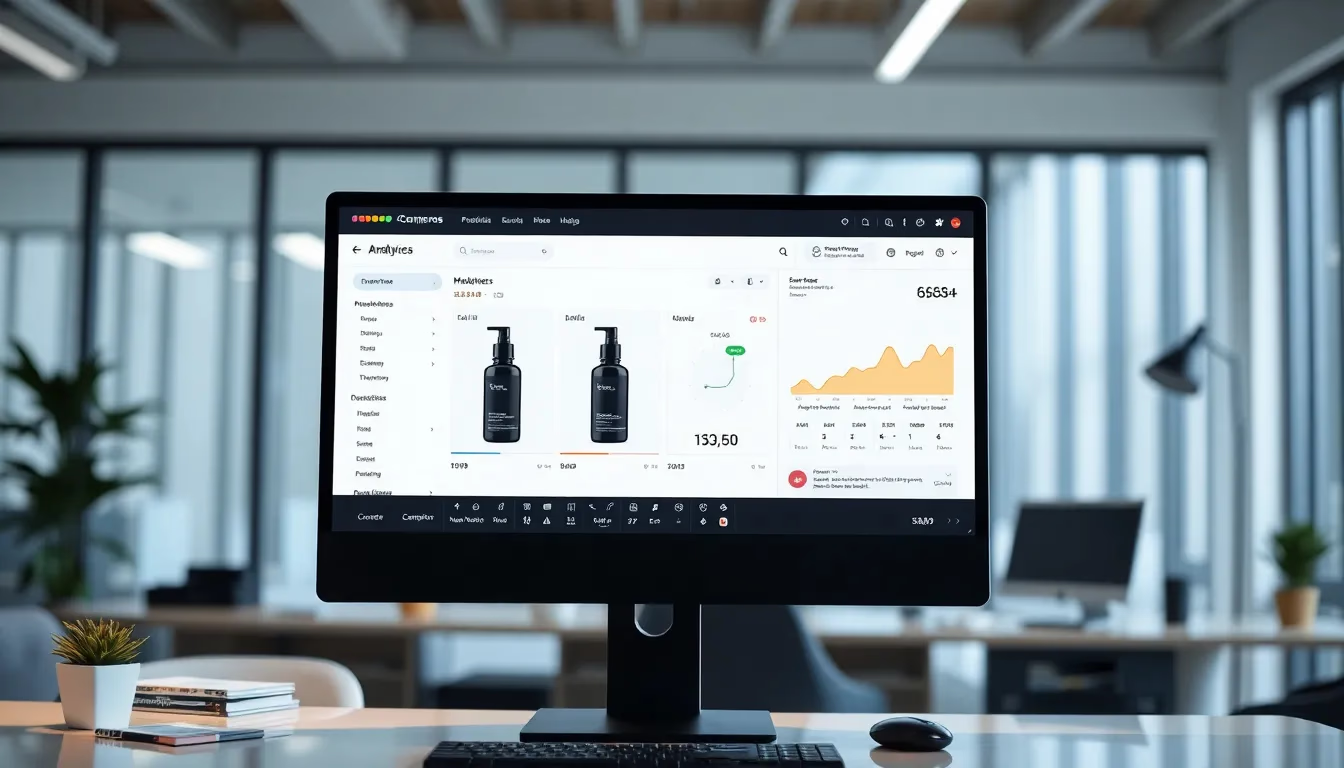
The financial argument for AI product photography becomes compelling when examining complete workflows.
Traditional professional photography might cost $50 per product for basic shots. Add lifestyle images, and costs rise to $100-200 per product. A 200-product catalog could demand $10,000-40,000 in photography investment alone.
AI-powered workflows reduce these costs by 70-90%. Source images can be captured internally with basic equipment. AI processing handles enhancement, background manipulation, and variation generation at subscription costs rather than per-image fees.
This cost reduction enables strategic flexibility impossible under traditional models. You can refresh imagery seasonally, test different presentation styles, and generate platform-specific variations without proportional cost increases.
Integration with Broader Marketing Strategies
Product photography rarely exists in isolation. Images feed into advertising campaigns, social media content, and promotional materials. AI tools that handle still imagery often connect with broader creative capabilities.
For businesses already leveraging AI in advertising, adding AI product photography creates workflow synergies. The same technology principles that enable AI video generation for advertising apply to product imagery workflows. Understanding these connections helps businesses build integrated creative systems rather than disconnected tool collections.
Similarly, the professional headshot capabilities businesses use for CV and LinkedIn photos often extend to product photography contexts. The underlying AI technology handles different subjects but applies similar enhancement principles.
Common Mistakes and How to Avoid Them
Over-Processing
AI enhancement can push images beyond realistic appearance. Colors become unnaturally saturated. Surfaces appear plastically smooth. Products look rendered rather than photographed. Maintain restraint in enhancement settings to preserve authentic product representation.
Inconsistent Treatment
Applying different processing approaches across your catalog creates visual dissonance. Establish presets and apply them consistently. Even slight variations in background warmth or shadow direction become noticeable when images appear together on category pages.
Ignoring Platform Requirements
Different sales channels have specific image requirements. Amazon demands white backgrounds. Instagram favors lifestyle context. Your own website might use different aspect ratios. Generate platform-appropriate variations from your enhanced source images rather than forcing single versions across all channels.
Misrepresenting Products
AI can generate flattering images that don't accurately represent actual products. This capability must be used responsibly. Enhanced images should show products at their best while remaining truthful about appearance, color, and quality. Misrepresentation damages customer trust and increases return rates.
The Future of Product Photography
AI capabilities in product photography continue advancing rapidly. Current tools handle background manipulation, lighting correction, and basic generation. Emerging capabilities include 3D model generation from 2D images, automatic angle variation creation, and intelligent lifestyle context matching.
Platforms like Photomize AI continuously expand their capabilities, making professional product photography accessible to businesses that previously couldn't compete visually with larger competitors.
The direction is clear: barriers to professional product imagery continue falling. Businesses that adopt AI-powered workflows now build operational advantages and visual consistency that compound over time.
Taking Action
The gap between businesses with professional product imagery and those without is closing – but only for those who embrace available tools. AI product photography has matured beyond experimental technology into practical business infrastructure.
Start with your most important products. Establish visual standards. Build systematic workflows. The technology exists today to create product imagery that converts browsers into buyers, regardless of your previous photography capabilities or budget constraints.
Your products deserve presentation that matches their quality. AI makes that presentation achievable.