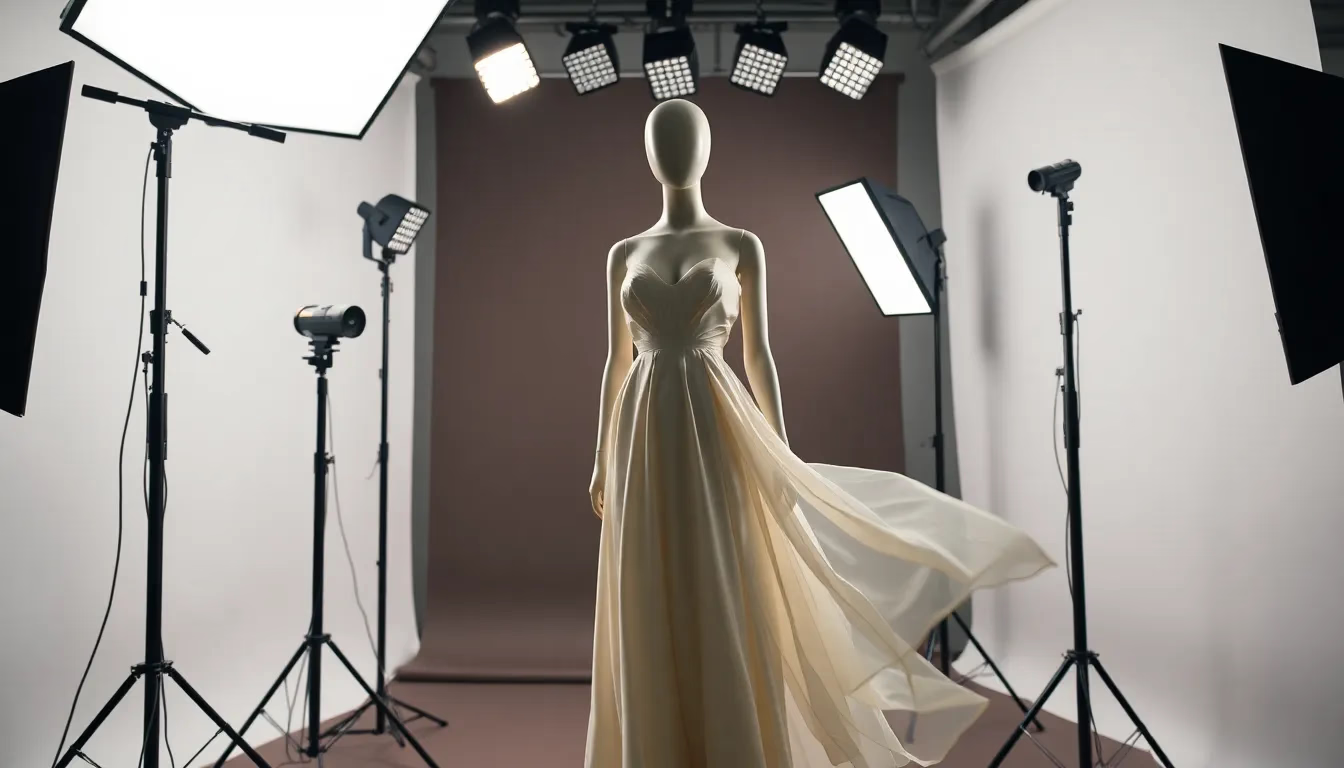

Fashion photography has always been an industry built on visual excellence. From glossy magazine spreads to scrollable social feeds, captivating imagery drives purchasing decisions and shapes brand perception. Yet traditional fashion photography demands extraordinary resources – professional photographers, experienced models, stylists, makeup artists, location scouts, and post-production specialists. A single editorial shoot can consume budgets that smaller brands simply cannot justify.
AI fashion photography is fundamentally disrupting this paradigm. Today, emerging designers and established brands alike can create stunning editorial imagery that rivals traditional photoshoots, achieving professional results without the prohibitive costs and logistical complexity that once defined the industry.
The Fashion Photography Challenge
Every fashion brand faces the same visual imperative. Consumers expect professional imagery across every touchpoint – websites, social media, advertising campaigns, and lookbooks. Research consistently shows that high-quality product photography increases conversion rates by up to 30%, while poor imagery actively drives customers toward competitors.
Consider the traditional fashion photoshoot workflow. Booking an experienced fashion photographer typically costs £2,000-10,000 per day. Professional models command £500-5,000 daily, depending on experience and exclusivity. Add stylists, makeup artists, hair professionals, and assistants, and costs escalate rapidly. Studio rental, location permits, equipment hire, and travel expenses compound the investment further.
For seasonal collections requiring dozens of looks across multiple campaigns, these expenses become staggering. Small and medium fashion brands often compromise, using amateur photography or limited imagery that fails to communicate their design vision effectively. The visual gap between emerging brands and established fashion houses becomes a self-perpetuating disadvantage.
Timing creates additional pressure. Fashion operates on relentless cycles – new collections launch constantly, trend-responsive content demands rapid production, and social media algorithms reward consistent posting. Traditional photoshoot scheduling rarely accommodates this velocity. Weather cancellations, model availability conflicts, and post-production delays can derail carefully planned marketing calendars.
How AI Transforms Fashion Photography
Virtual Model Generation
The most revolutionary application involves creating photorealistic model imagery without physical photoshoots. Advanced AI systems generate diverse, professional models wearing your actual garments, producing results indistinguishable from traditional photography.
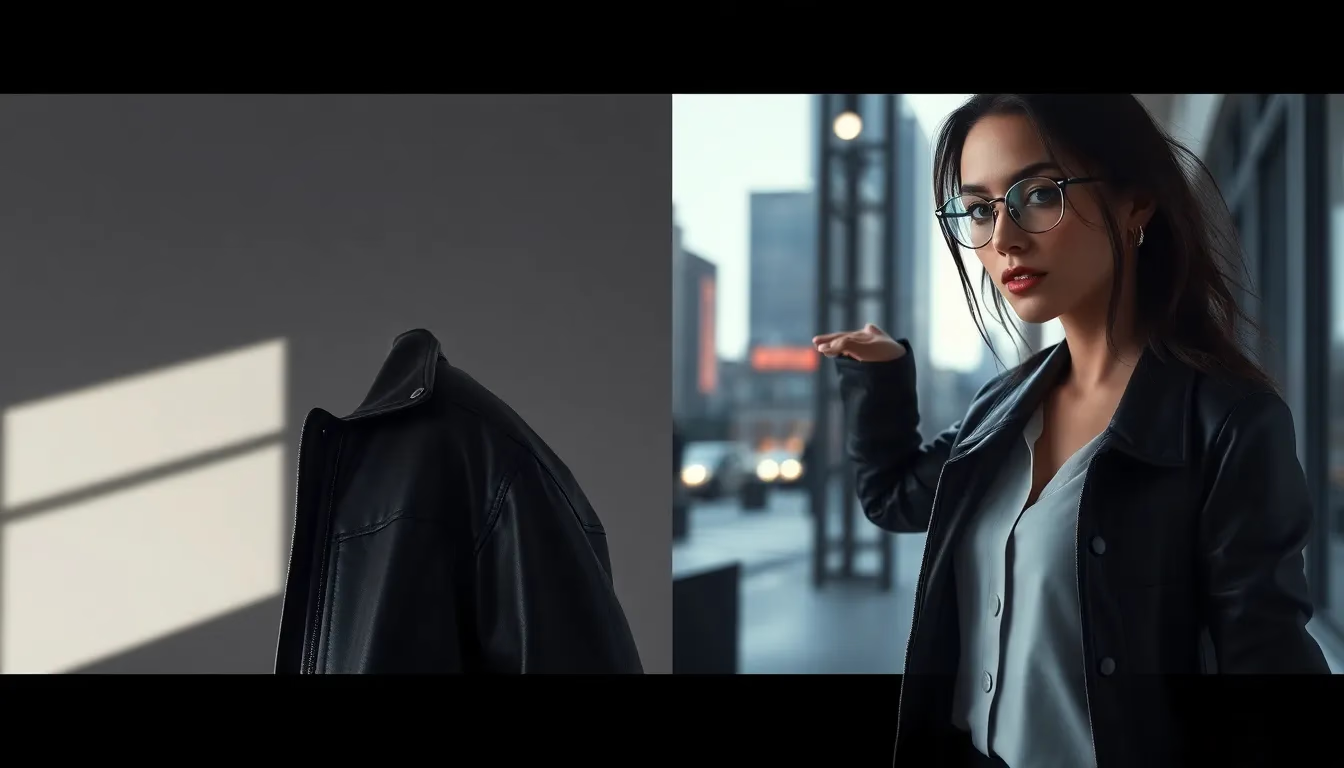
This capability transforms inventory photography entirely. Rather than scheduling models for every product variation, brands photograph garments on mannequins or flat-lay arrangements, then generate model imagery algorithmically. Sizing variations, colour options, and styling alternatives multiply without additional shoot days.
Photomize AI enables this transformation, allowing fashion brands to create unlimited model variations while maintaining consistent visual quality across entire collections.
Diversity becomes achievable rather than aspirational. Traditional fashion photography often limits model representation due to budget constraints and casting availability. AI generation eliminates these barriers, enabling brands to showcase clothing on models representing various ethnicities, body types, ages, and presentations – ensuring every customer sees themselves reflected in marketing imagery.
Editorial Scene Creation
Beyond product photography, AI enables sophisticated editorial content that previously required elaborate location shoots. Imagine placing your designs in Parisian streetscapes, minimalist Scandinavian interiors, dramatic desert landscapes, or sleek urban environments – without leaving your studio.
These generated environments maintain photorealistic quality while offering unlimited creative flexibility. Seasonal campaigns transition instantly from summer beaches to winter chalets. Brand storytelling expands beyond practical constraints, limited only by creative imagination rather than production budgets.
For brands exploring professional digital portraits for their team alongside product imagery, AI avatar profile pictures provide the same transformative benefits for corporate photography needs.
Styling and Variation Exploration
Traditional fashion photography locks creative decisions at capture time. Once a shoot concludes, changing styling directions requires expensive reshoots. AI generation inverts this limitation, enabling extensive experimentation after initial image creation.
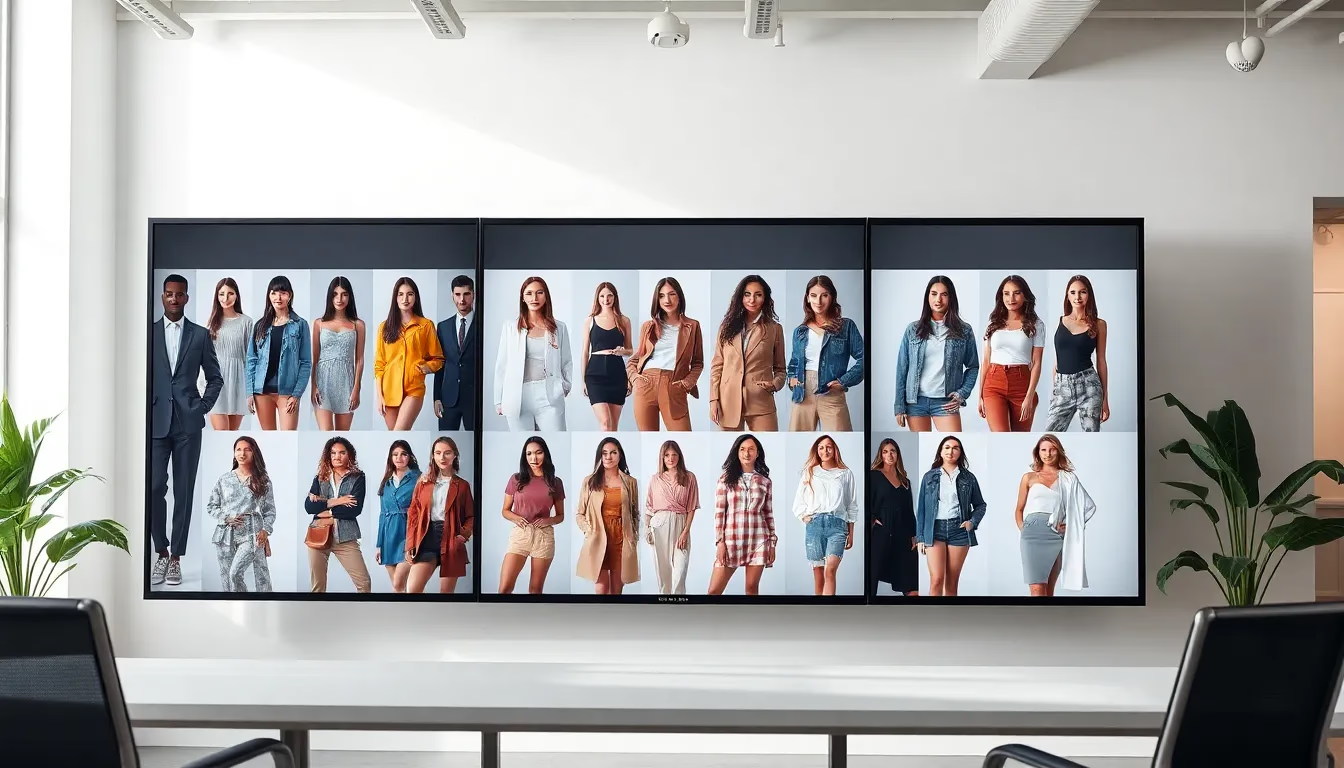
Test different accessory combinations, explore alternative colour grading approaches, experiment with various backdrop atmospheres – all without additional production costs. This flexibility proves invaluable for A/B testing marketing imagery, allowing data-driven optimisation of visual content based on actual audience response.
Practical Applications Across Fashion Categories
E-commerce Product Photography
Online fashion retail demands consistent, high-quality imagery across potentially thousands of SKUs. AI generation maintains visual coherence while dramatically accelerating production timelines. New arrivals can feature professional model photography within hours of inventory receipt, rather than waiting for scheduled photoshoot slots.
The technology particularly benefits fast-fashion and trend-responsive retailers, where speed-to-market determines competitive advantage. While competitors await traditional photography delivery, AI-enabled brands already drive traffic to fully merchandised product pages.
This approach complements strategies covered in our guide to AI e-commerce model photos, which explores virtual fashion photography techniques in greater depth.
Campaign and Advertising Imagery
Brand campaigns require distinctive visual narratives that communicate seasonal themes and collection stories. AI enables ambitious creative concepts without corresponding budget expansion. Emerging designers can produce campaign imagery with the visual sophistication previously exclusive to major fashion houses.
Social media advertising particularly benefits from AI generation capabilities. Platform algorithms reward creative variation, but producing multiple ad versions through traditional photography proves cost-prohibitive. AI enables unlimited creative iterations, supporting extensive testing to identify highest-performing visual approaches.
Lookbook and Catalogue Production
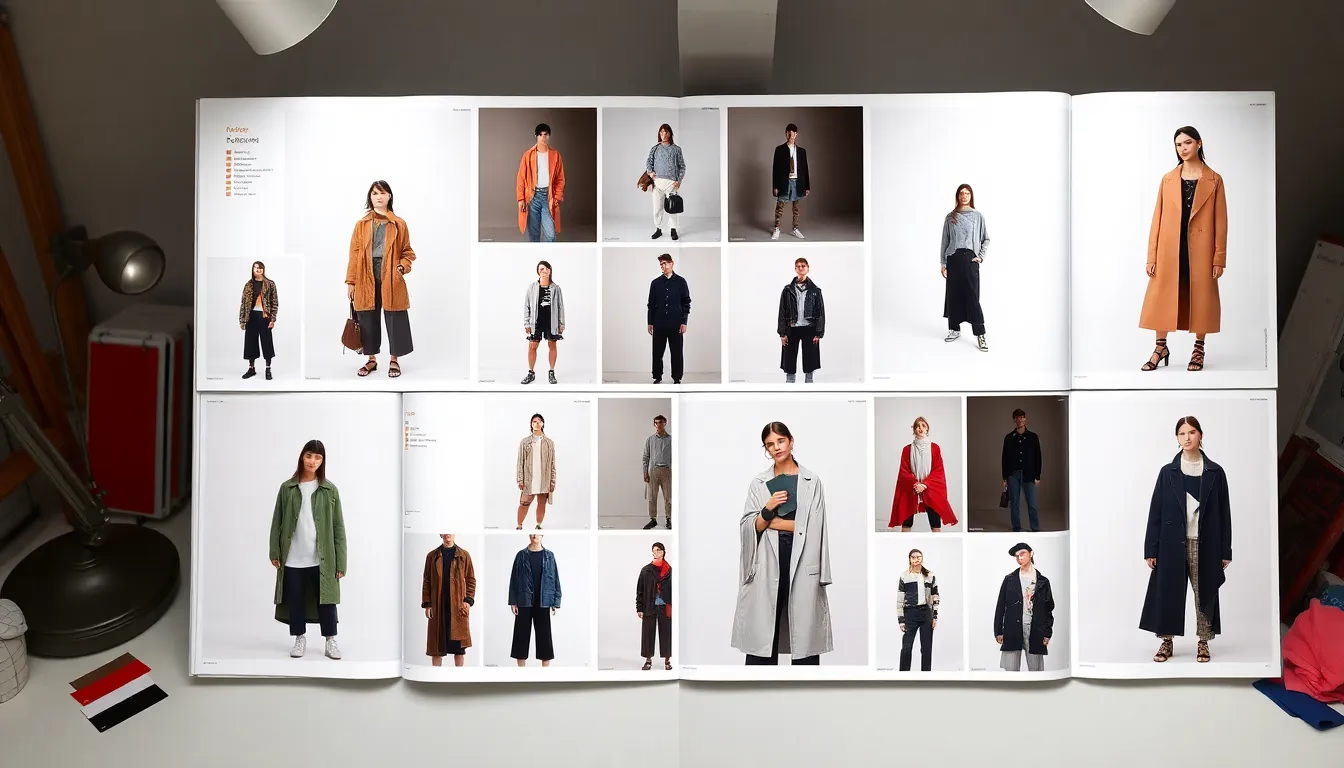
Seasonal lookbooks traditionally represent significant production investments – comprehensive shoots capturing every collection piece across multiple styling scenarios. AI generation transforms lookbook economics, enabling complete collection documentation without proportional cost increases.
This democratisation proves particularly valuable for independent designers and small fashion labels. Professional lookbooks become achievable marketing tools rather than aspirational luxuries, enabling smaller brands to present collections with polish matching established competitors.
Best Practices for AI Fashion Photography
Maintaining Brand Consistency
Successful implementation requires establishing clear visual guidelines before generation begins. Define preferred lighting styles, background approaches, model characteristics, and overall aesthetic direction. Consistent parameters ensure generated imagery maintains cohesive brand identity across all applications.
Document these specifications thoroughly. Creating style guides for AI generation enables consistent results regardless of who manages production, protecting brand integrity as teams evolve or external collaborators contribute.
Balancing AI and Traditional Photography
Most successful fashion brands adopt hybrid approaches. Hero campaign imagery may still warrant traditional photoshoots for maximum creative control, while AI handles high-volume product photography and social content. This strategic allocation optimises budgets while maintaining visual excellence where it matters most.
Consider customer expectations across different contexts. Luxury positioning may benefit from traditional photography's perceived authenticity for flagship content, while AI enables necessary visual volume for comprehensive product coverage.
Quality Control and Refinement
AI generation requires thoughtful review processes. Establish quality standards and implement consistent evaluation before publishing generated imagery. Pay particular attention to garment details – fabric textures, construction elements, and fit accuracy all require verification against actual products.
Iterative refinement improves results over time. Analyse which generation parameters produce optimal outcomes for specific garment categories, building institutional knowledge that accelerates future production while enhancing quality.
The Competitive Advantage
Fashion brands embracing AI photography gain measurable advantages. Production timelines compress from weeks to hours. Visual content volume expands without proportional budget increases. Creative experimentation becomes financially viable rather than prohibitively expensive.
Perhaps most significantly, the technology democratises professional fashion imagery. Emerging designers compete visually with established brands, evaluation based on design merit rather than marketing budget disparities. This levelling effect reshapes industry dynamics, rewarding creativity and responsiveness over financial resources alone.
For brands also selling physical products alongside fashion items, similar AI capabilities transform product photography across categories, creating cohesive visual merchandising strategies.
Future Directions
AI fashion photography capabilities continue advancing rapidly. Video generation enables dynamic content creation, bringing garments to life through movement that static imagery cannot capture. Virtual try-on experiences merge AI generation with augmented reality, allowing customers to visualise garments on themselves before purchasing.
Sustainability benefits deserve recognition. Reduced physical photoshoots mean fewer travel emissions, less sample production waste, and diminished resource consumption. As fashion increasingly prioritises environmental responsibility, AI photography aligns production practices with stated values.
Getting Started
Begin with specific, contained projects rather than comprehensive transformation. Select a product category or campaign element for initial AI photography implementation. Evaluate results against traditional approaches, gathering data on quality, efficiency, and audience response.
Photomize AI provides accessible entry points for fashion brands exploring these capabilities, offering intuitive tools that deliver professional results without requiring extensive technical expertise.
Document learnings systematically. Understanding which approaches succeed for your specific aesthetic and audience enables confident scaling as capabilities prove themselves. Fashion photography transformation happens incrementally – each successful implementation builds foundation for expanded adoption.
The fashion industry's visual demands continue intensifying. Consumer expectations rise alongside platform proliferation. Brands that master AI photography capabilities position themselves for sustained competitive advantage, achieving visual excellence efficiently while preserving resources for design innovation and customer experience enhancement. The technology exists. The opportunity awaits. The question remaining is simply how quickly you'll embrace it.