
The Magic Trick That Isn't Really Magic
You type a few words – maybe "a dragon flying over a neon city at sunset" – and seconds later, an image appears that never existed before. It feels like magic, doesn't it? But behind that seemingly impossible trick lies some genuinely clever technology that, once you understand the basics, makes a lot of sense.
If you've ever wondered how AI image generators actually create pictures from nothing but words, you're asking one of the most fascinating questions in modern technology. And here's the good news: you don't need a computer science degree to understand it. Let's break it down in a way that anyone can follow.
Starting With the Big Picture
Imagine you're learning to draw dogs. You'd probably look at thousands of dog photos, noticing patterns – four legs, fur, snouts, tails, floppy or pointy ears. After seeing enough examples, you'd develop an understanding of what makes a dog look like a dog, even if you couldn't explain every detail in words.
AI image generators work on a surprisingly similar principle, just at a massive scale and with mathematical precision instead of human intuition. They learn from millions upon millions of images, building an internal understanding of what things look like – cats, mountains, sunsets, abstract art, vintage photographs, and everything in between.
The result is a system that doesn't copy existing images but genuinely creates new ones based on learned patterns. It's like the difference between memorising song lyrics and understanding music well enough to compose your own melodies.
The Noise-to-Picture Process (Diffusion Explained)
Here's where things get interesting. The most popular AI image generators today use something called "diffusion models." Don't worry – the name sounds complicated, but the concept is beautifully simple once you see it.
Think of Television Static
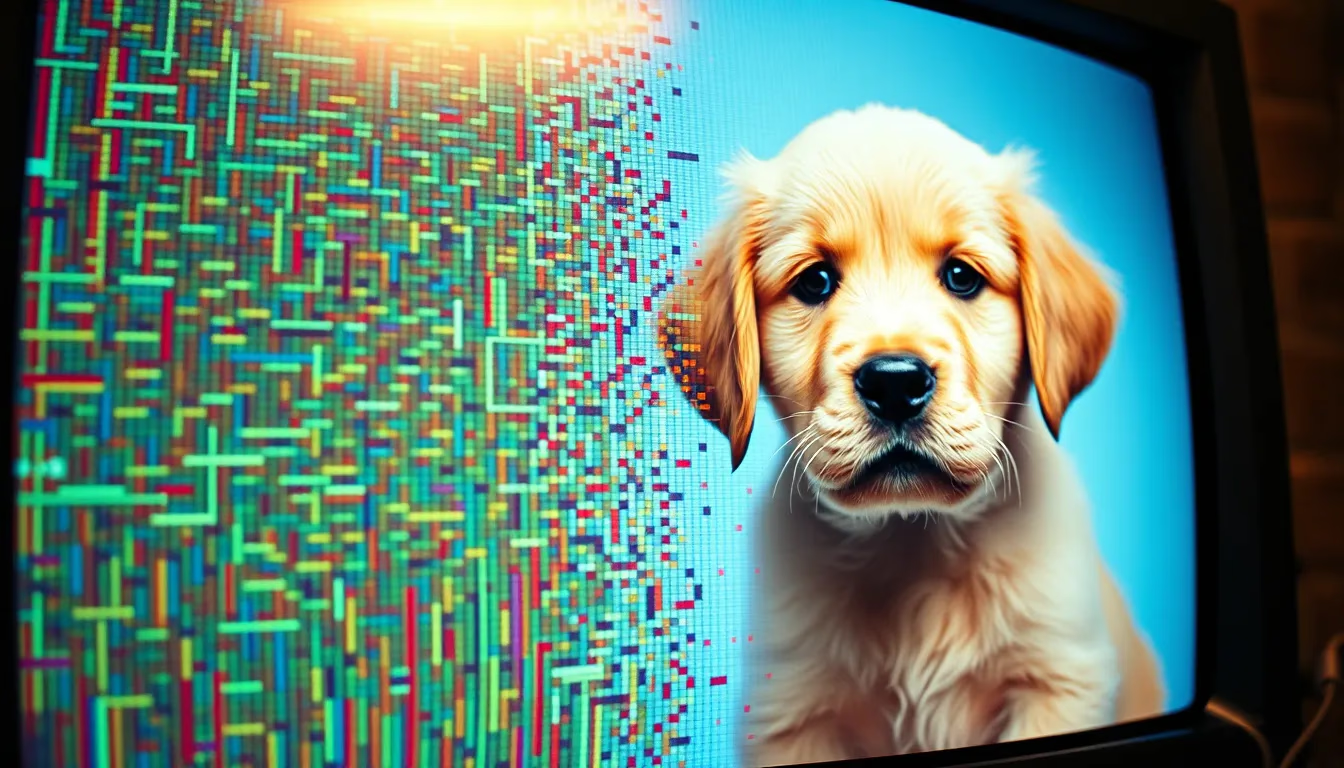
Remember old televisions that showed fuzzy static when they lost signal? Pure random noise, no picture at all. Now imagine if you could somehow train a system to gradually remove that noise, bit by bit, until a clear picture emerged.
That's essentially what diffusion models do, but in reverse order during training.
How Training Works
During training, the AI takes millions of real images and slowly adds random noise to them – like gradually turning a clear photograph into static. It does this in tiny steps, learning at each stage exactly how much noise was added and what the image looked like before that noise appeared.
After doing this countless times with countless images, the AI becomes incredibly good at the reverse process: taking pure noise and removing it step by step until a coherent image forms.
Creating New Images
When you ask for a new image, the AI starts with complete random noise – essentially a canvas of digital static. Then, guided by your text description, it gradually removes noise in a way that shapes the static into something matching your words. Each step brings the image slightly closer to your description until you have a finished picture.
It's like sculpting, but instead of removing marble to reveal a statue, the AI removes randomness to reveal an image hidden in the chaos.
The Massive Library of Learning
For any of this to work, AI image generators need training data – and we're talking about an almost incomprehensibly large amount of it.
Millions Upon Millions of Examples
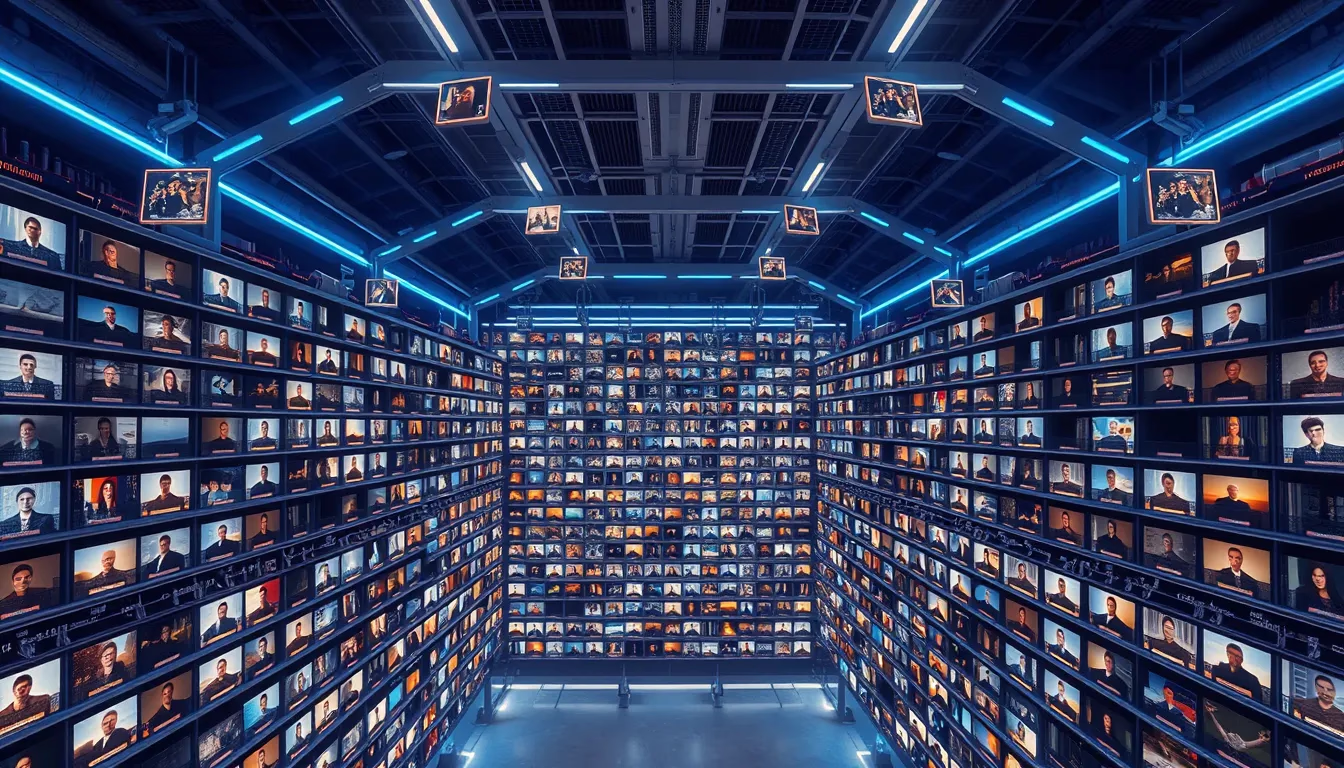
Modern image generators train on datasets containing hundreds of millions of images, each paired with text descriptions. These image-text pairs teach the AI to connect words with visual concepts. When the training data includes thousands of photos labelled "sunset over ocean," the AI learns what visual elements typically appear in such scenes – warm colours, horizontal water lines, sun position, cloud patterns.
This massive exposure creates what you might call visual vocabulary. Just as you learned that the word "chair" refers to things with seats and backs, AI learns that certain words correspond to certain visual patterns.
Learning Concepts, Not Copying Images
Crucially, well-designed AI generators don't simply store and retrieve training images. They extract patterns, relationships, and concepts. When you request "a red bicycle in Paris," the AI isn't searching for a matching photo – it's combining its learned understanding of bicycles, the colour red, and Parisian aesthetics to generate something new.
This distinction matters because it's the difference between a search engine and a creative tool. The AI generates novel combinations, which is why you can request things that probably don't exist in any photograph, like "a cat wearing a tiny crown sitting on a velvet throne."
How Words Become Pictures
The text-to-image connection is where things get especially clever. Your typed prompt needs to guide the noise-removal process, steering it toward your desired outcome.
Understanding Your Words
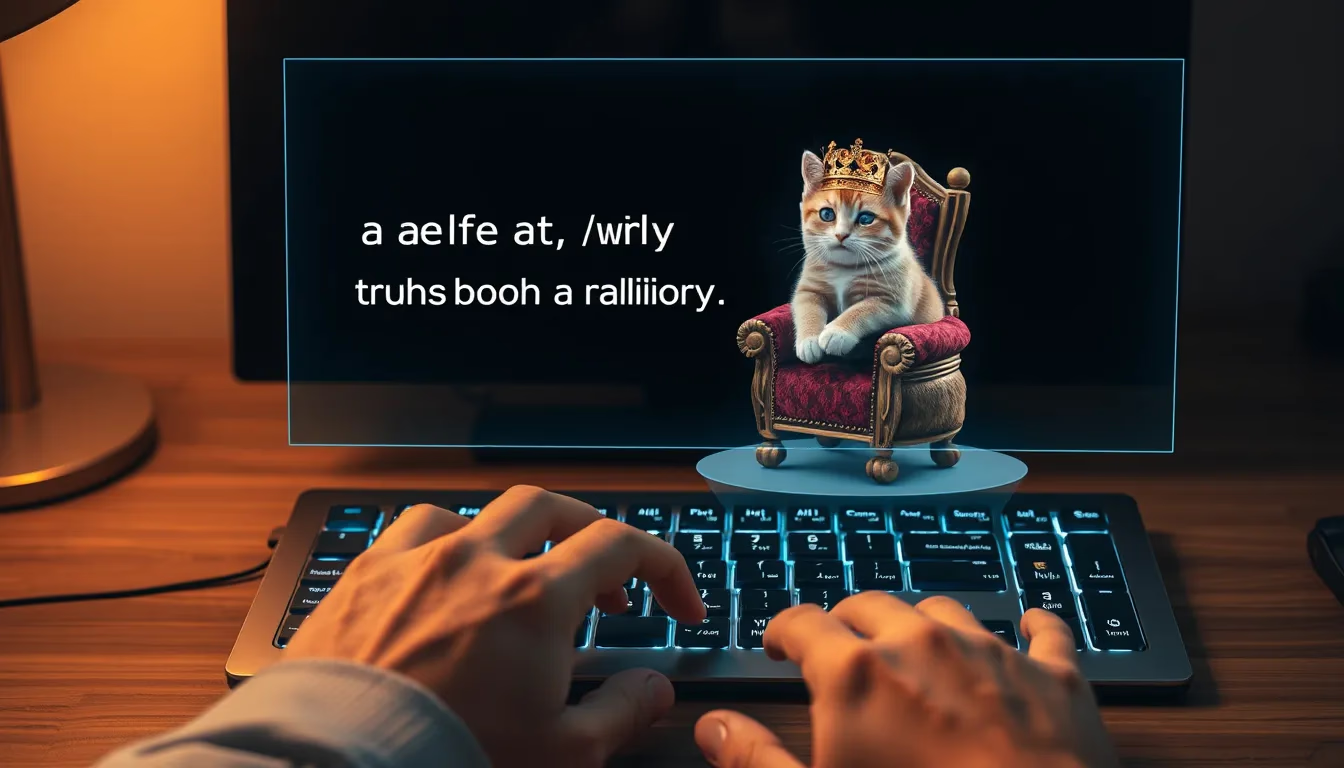
Before the AI can generate images, it needs to understand what you're asking for. This happens through language models – AI systems trained to understand text meaning. When you type "a cosy cottage in autumn," the language component breaks this down into understood concepts: architecture type, atmosphere, season, associated colours and lighting.
These understood concepts then influence each step of the image generation process, nudging the noise removal in directions that align with your description.
Why Prompts Matter So Much
This explains why prompt writing has become almost an art form itself. More detailed, specific prompts give the AI more guidance, producing results closer to your mental image. Vague prompts leave more room for interpretation, which can be either freeing or frustrating depending on your goals.
As explored in our guide to AI social media content, understanding how to communicate with AI image tools helps you create more effective visuals for any purpose. The principles of clear, descriptive communication apply whether you're generating content for Instagram, YouTube thumbnails, or personal projects.
The Building Blocks: Neural Networks
Underneath everything we've discussed are neural networks – computer systems loosely inspired by human brain structure.
Layers Upon Layers
Neural networks consist of interconnected layers that process information. Early layers might recognise basic elements like edges and colours. Middle layers combine these into shapes and textures. Later layers understand complex concepts like faces, animals, or architectural styles.
During training, these networks adjust millions of internal settings (called parameters) to improve their predictions. It's like tuning millions of tiny dials until the system produces good results consistently.
Why "Deep Learning" Earned Its Name
The "deep" in deep learning refers to having many layers – modern image generators have architectures with enormous depth and complexity. This depth allows them to capture incredibly subtle patterns and relationships that simpler systems would miss entirely.
What AI Image Generators Can and Cannot Do
Understanding the technology helps explain both the capabilities and limitations of these tools.
Impressive Capabilities
Modern AI image generators can produce remarkably detailed, aesthetically pleasing images across countless styles. They handle abstract concepts, combine unlikely elements, and often produce results that genuinely surprise their creators. Platforms like Photomize AI make these capabilities accessible without requiring technical expertise.
Current Limitations
Despite their impressive abilities, AI generators still struggle with certain things. Text within images often appears garbled. Counting specific numbers of objects proves unreliable. Complex spatial relationships or unusual perspectives can confuse the system. Hands and fingers remain notoriously challenging.
These limitations stem from the training process – if certain concepts appeared inconsistently or rarely in training data, the AI's understanding of them remains shakier.
Related AI Image Technologies
The same fundamental approaches power various specialised tools beyond pure generation.
Techniques similar to those in generators enable AI background removal, where systems learn to distinguish subjects from backgrounds with remarkable precision. The pattern recognition that helps generators understand what belongs in an image also helps removal tools understand what to separate.
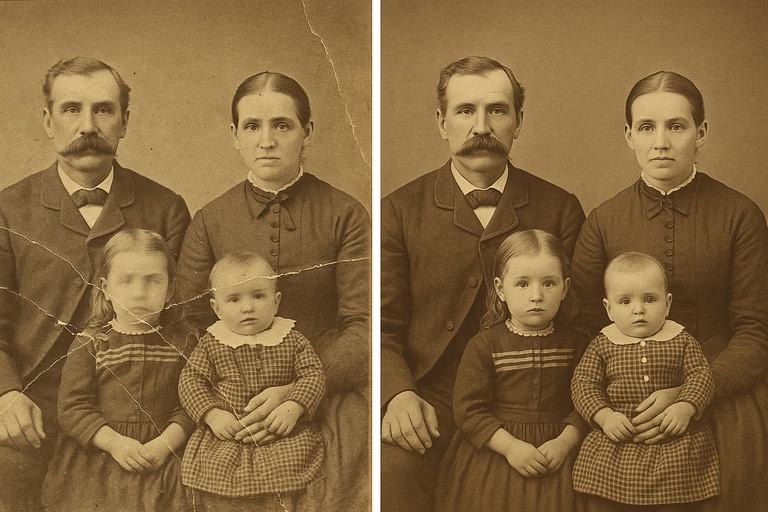
Similarly, AI photo restoration uses learned patterns to fill in damaged or missing portions of photographs – essentially a constrained version of image generation focused on completing existing images rather than creating entirely new ones.
Why This Matters for Everyday Creators
Understanding how AI image generators work isn't just intellectually satisfying – it makes you better at using them.
Knowing that the AI learned from image-text pairs helps you write more effective prompts. Understanding the noise-to-image process explains why generation sometimes produces unexpected results and why multiple attempts can yield different outcomes from identical prompts.
This knowledge also helps you set realistic expectations. AI image generators are genuinely powerful creative tools, but they're not mind readers. They respond to the information you provide, filtered through patterns learned from training data.
The Technology Continues Evolving
What we've described represents the current state of AI image generation in 2026, but the field moves remarkably quickly. Researchers continually develop new architectures, training approaches, and techniques that address current limitations.
Future systems will likely handle text rendering better, manage complex spatial relationships more reliably, and produce even higher quality results. The fundamental principles – learning patterns from data and using them to guide generation – will likely remain, but the implementations will grow increasingly sophisticated.
Wrapping Up: Not Magic, But Genuinely Remarkable
AI image generators work by learning visual patterns from massive datasets, then using that learned knowledge to transform random noise into coherent images guided by text descriptions. The process involves sophisticated mathematics and enormous computational resources, but the core concepts are accessible to anyone willing to think about them.
The next time you type a prompt and watch an image appear, you'll know what's happening beneath the surface – not magic, but genuinely remarkable technology that continues reshaping how we create and interact with visual content.